Why Can't I Sleep Well During PMS? (And What Actually Helps)
HiherbsOfficial
Two clocks can run at once in the week before bleeding. One is the calendar: ovulation has already happened, progesterone is up, core temperature sits a little higher, and both progesterone and estrogen then fall in the days before the period. The other is the week itself — a deadline, a late screen, a cup of coffee that still counts. Daily stress can steal sleep. It is not the only mechanism in that window.
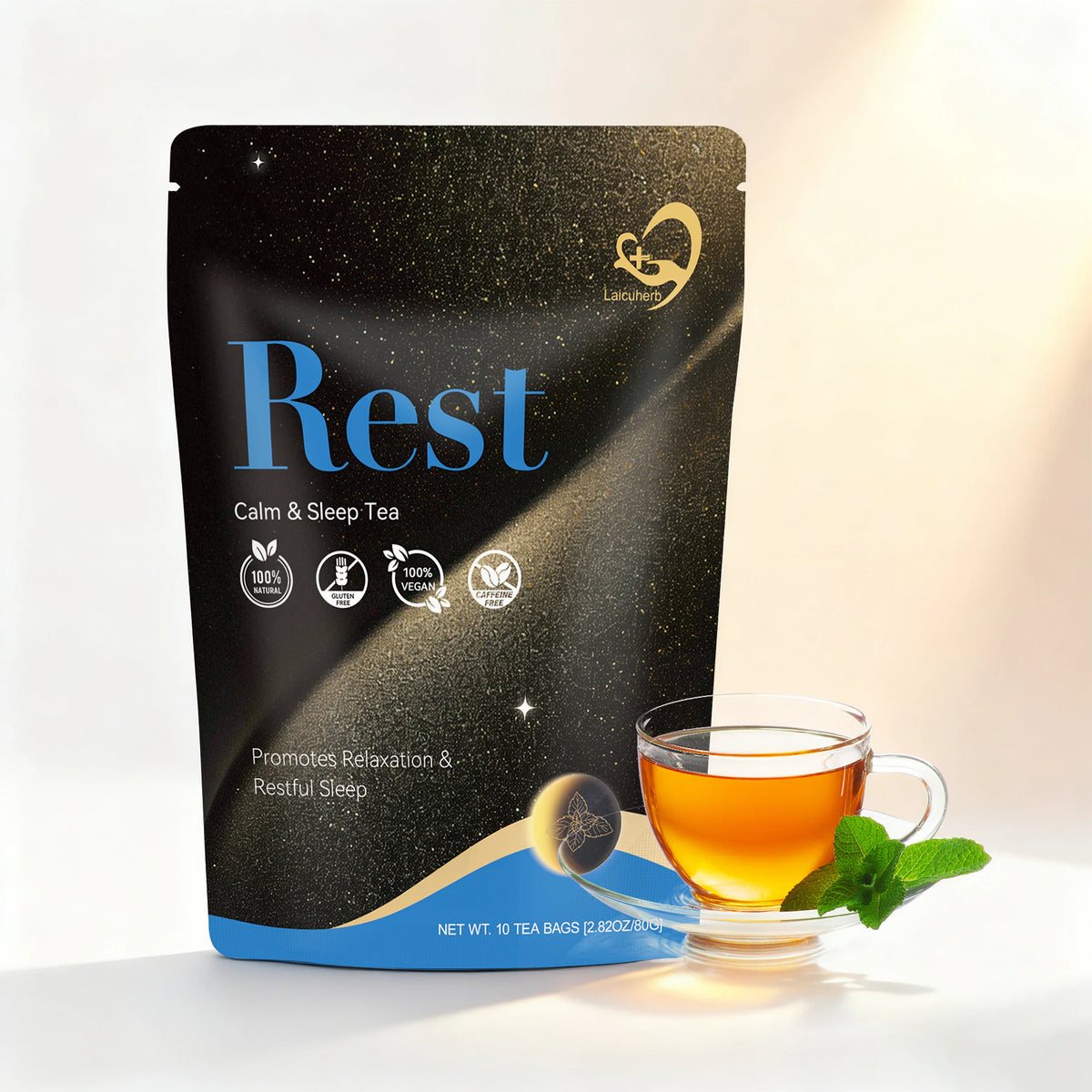
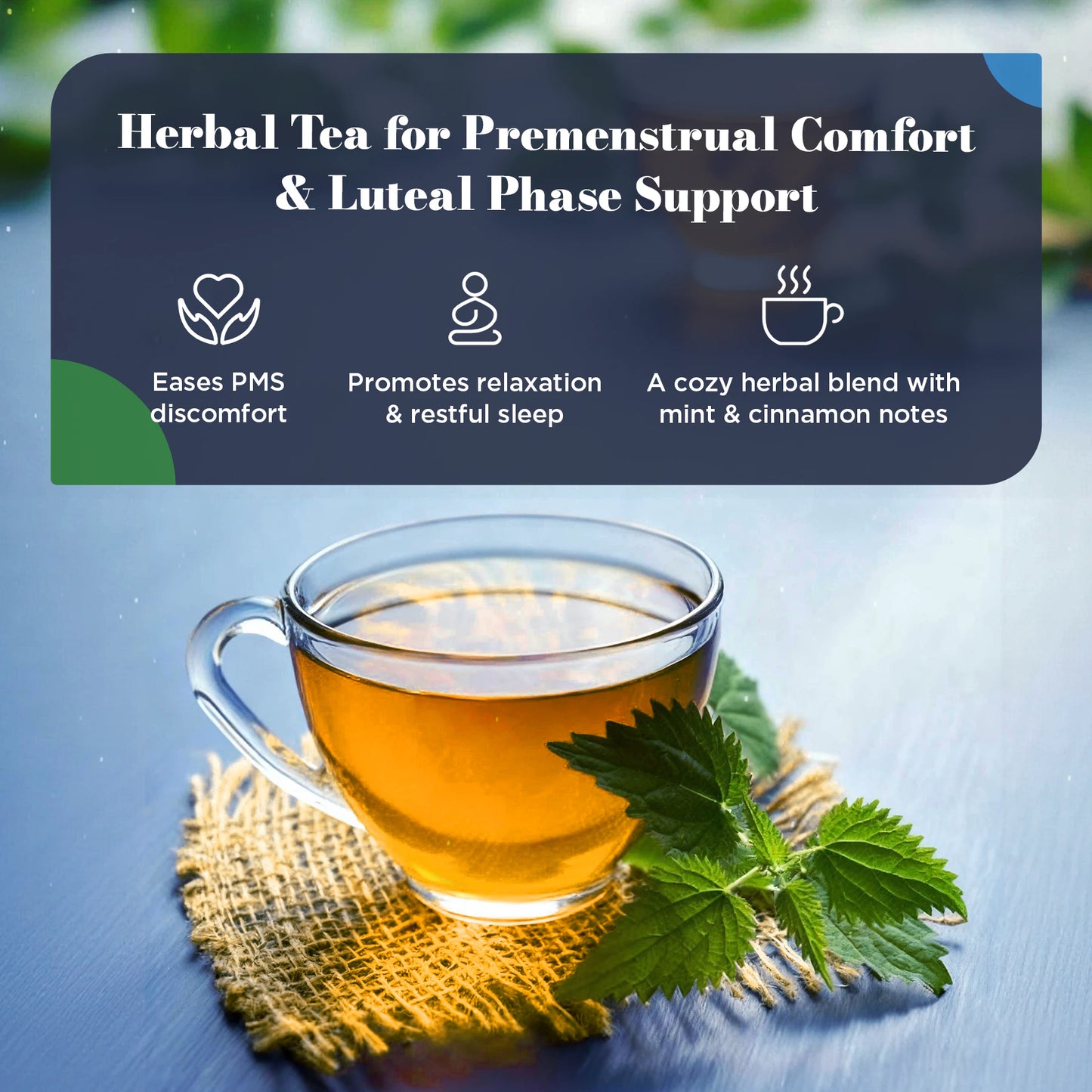
Laicuherb Rest Calm & Sleep Tea is a caffeine-free luteal-phase blend: cinnamon, nettle leaf, raspberry fruit, ginger, spearmint, lemongrass, ashwagandha, and radix asparagi, in 8 g sachets, ten per pack [7]. The cup is an evening drink. It does not change hormone levels, treat PMS, or replace a clinician when nights stay broken after bleeding starts.
In this article
Hours in bed vs architecture →
Cycle-timed vs chronic insomnia →
Extract papers vs this sachet →
Quick Answer: Cycle-Timed Nights Are Not the Same as Chronic Insomnia
If the same stretch of nights returns every cycle and eases once bleeding starts, the calendar is doing some of the work. “Just relax” misses that timing.
What the luteal window looks like
After ovulation, progesterone rises and core temperature usually sits a little higher. In the days before bleeding, both progesterone and estrogen fall. Those swings touch temperature, mood, and the chemistry that helps sleep feel deep rather than light [1]. Baker and Driver reviewed this in Sleep Medicine in 2007: in healthy women, luteal-phase core temperature is higher and the daily temperature swing is smaller than in the follicular phase. Subjective sleep quality is often lowest around menses, even when the timing and makeup of sleep stay relatively stable [1].
What Rest Tea is not
A warm, caffeine-free cup at a regular hour can be the last predictable action of the evening, next to dimmer lights and a cooler room. Laicuherb Rest Calm & Sleep Tea is built for that luteal-phase slot [7]. The finished blend has not been tested as a sleep drug. The useful part of the ritual is the cue, not a promise that the herbs restore deep sleep.
Hours in Bed vs Sleep Architecture
Sleep is not one block. Light sleep, deep slow-wave sleep, and REM take turns. The luteal phase can rearrange that sequence without always shortening the night, which is why “sleep more” can miss the quality problem.
Shechter, Varin, and Boivin recorded eight healthy, ovulatory women in the mid-follicular and mid-luteal phases using a laboratory nap protocol, published in Sleep in 2010 — not in The Journal of Clinical Endocrinology & Metabolism. Nighttime core temperature was higher and its daily amplitude smaller in the mid-luteal window. Melatonin timing did not shift with menstrual phase. Most sleep measures, including slow-wave sleep, did not differ by phase. REM sleep did: its circadian pattern showed less REM at certain night phases in the mid-luteal recordings [2].
That is a modest architecture finding in a small healthy group. It is not proof that every premenstrual night is objectively worse, and it is not a tea trial. A slightly warmer body can make settling and staying asleep feel harder for some people. A cooler bedroom and breathable bedding address the heat. A mug of Rest Tea is a sensory evening habit. It is not a tested way to lower core temperature.
Allopregnanolone Explains Restless Chemistry, Not a Tea Trial
Progesterone is metabolized to allopregnanolone, a neurosteroid that can enhance GABA-A receptor activity. GABA is the brain’s main “slow down” signal. In the days before bleeding, allopregnanolone falls with progesterone.
Bäckström and colleagues reviewed allopregnanolone in mood disorders in Progress in Neurobiology in 2014. That paper is about mood chemistry in susceptible women, including premenstrual dysphoric patterns, not a sleep trial of herbal tea [3]. The withdrawal story helps explain why some luteal nights feel restless rather than simply “too much coffee.” Food and tea do not replace the neurosteroid. An evening sequence that lowers light and stimulation can still be a practical way to meet that week.
Two Patterns, Two Next Steps
Not every bad night before a period is the same condition as chronic insomnia. Mixing the two leads people to the wrong first tool.
Cycle-linked nights
These often cluster in the 7 to 10 days before bleeding and ease once the period starts. Tracking, a cooler room, less late caffeine, and a short wind-down are reasonable first steps. Laicuherb Rest Calm & Sleep Tea can sit in that wind-down as a caffeine-free drink [7].
Anxiety-driven or chronic insomnia
Racing thoughts that do not clock out when bleeding begins sit across the month. The International Classification of Sleep Disorders, Third Edition, treats insomnia disorder as a chronic problem lasting at least three months — a different clinical bucket from a sleep change that only appears in one cycle week [8]. Cognitive behavioral therapy for insomnia (CBT-I) is the first-line treatment for chronic insomnia in adults [5]. Rest Tea is not CBT-I, and it is not how you diagnose either pattern.
If you need the ingredient list or brewing details on the pack, write hiherbs0129@gmail.com.
What the Herbal Papers Measured — and What This Sachet Is

Cinnamon, spearmint, lemongrass, and ginger beside an unlabeled mug.
The plants in a bedtime cup have long kitchen and herbal use. The clinical papers people quote are usually extracts, not this sachet.
Langade 2019 — extract capsules
Ashwagandha (Withania somnifera) is the ingredient with the clearest human sleep data. Langade and colleagues gave adults with insomnia and anxiety 300 mg of ashwagandha root extract twice daily for ten weeks and reported better sleep-onset latency, sleep efficiency, and sleep-quality scores versus placebo [4]. That dose and format are capsules of standardized extract. They are not one 8 g mixed infusion.
This sachet — a drink, not those capsules
Spearmint and lemongrass explain much of the aroma. Ginger and cinnamon make the cup taste warm. Nettle leaf, raspberry fruit, and radix asparagi complete the formula on the Laicuherb panel [7]. None of those household steep amounts have been shown, in this blend, to treat PMS or insomnia.
Rest Calm & Sleep Tea is cinnamon, nettle leaf, raspberry fruit, ginger, spearmint, lemongrass, ashwagandha, and radix asparagi [7]. Brew it and drink it. It is not for cooking, skin, or any other use. The product page states it is not intended to diagnose, treat, cure, or prevent any disease, and that it does not change hormone levels or treat PMS [7]. Certificates listed for this SKU — ISO-FSSC, HACCP, HALAL, COI, COA — describe quality systems and batch paperwork. They are not sleep evidence.
If you are pregnant, nursing, on thyroid, sedative, or other prescription medicine, take the ingredient list to the clinician who already follows you. Ashwagandha in extract studies is the usual reason for that conversation, not a claim that one cup is equivalent to those capsules.
A Luteal-Week Wind-Down That Matches a Warmer Body
Generic sleep advice lands better when it matches a slightly warmer luteal body.
A bedroom around 18 °C (65 °F) and breathable clothes are practical when core temperature is already up. The CDC still points to a steady schedule, less screen time in the hour before bed, and less caffeine later in the day [6]. Those habits matter more in a week when sleep already feels thinner. If digestion feels louder before a period, an earlier dinner is a comfort choice, not a medical protocol.
Give the last half hour a small script: brew one sachet of Rest Tea, dim the lights, put the phone in another room. If you already track your cycle, start that script a few days before your usual premenstrual stretch instead of waiting until you cannot sleep. Repeating the same few steps each month is a habit. It is not a guarantee that the week will feel easy.
When a Cup Is Not Enough
A tea ritual and a cooler room are supports. They are not care.
Ask about CBT-I
If the nights last beyond one cycle week, continue into the follicular phase, or make work and daily life hard, talk with a clinician. Qaseem and colleagues, writing for the American College of Physicians in 2016, recommend CBT-I as the initial treatment for chronic insomnia in adults [5]. It is structured, usually short-term, and often more useful long-term than sleeping pills.
Seek medical evaluation
Severe mood symptoms, possible premenstrual dysphoric disorder (PMDD), loud snoring or gasping that could be sleep apnea, or anxiety that does not let you function belong with an OB-GYN or sleep specialist. If mood symptoms include thoughts of self-harm, that is a crisis, not a tea question: in the U.S., call or text 988.
Conclusion
Trouble sleeping before a period is a common luteal-phase pattern, not a character flaw. Hormones and temperature shift after ovulation; subjective sleep often feels worse around menses even when the sleep-study changes are modest [1][2]. What actually helps, in the ordinary case, is still unglamorous: a cooler room, a steady bedtime, less late caffeine and screen light, and a clinician when the problem is severe or lasts past the bleeding week. Laicuherb Rest Calm & Sleep Tea is a caffeine-free luteal-phase cup you can put in that evening [7]. Use it as a drink. Do not use it as a diagnosis.
FAQ
1. Is Rest Calm & Sleep Tea only for the luteal week?
The blend is positioned for the luteal phase, from after ovulation until bleeding starts [7]. Because it is caffeine-free and meant only to be brewed and drunk, some people also use it on other evenings as a warm cup. That is a routine choice. It is not a reason to treat every night as a medical luteal protocol.
2. Does the formula include melatonin or a sleep drug?
No. Rest Calm & Sleep Tea lists cinnamon, nettle leaf, raspberry fruit, ginger, spearmint, lemongrass, ashwagandha, and radix asparagi [7]. It is not a sleep aid and is not intended to diagnose, treat, cure, or prevent any disease.
3. When in the evening should I brew it?
Most people drink it 30 to 60 minutes before bed, which leaves time for the warmth and the rest of the wind-down. That timing is about the ritual. It is not a measured onset-latency dose.
Keep the Wind-Down Simple
A luteal-phase bedtime does not need a new personality. It needs a cooler room, dimmer light, and a cup that does not add caffeine. Laicuherb Rest Calm & Sleep Tea is that cup: minty-spiced, 8 g × 10 bags, brewed and drunk only [7].
Questions on ingredients, brewing, or timing: hiherbs0129@gmail.com
References
- Baker, F. C., & Driver, H. S. (2007). Circadian rhythms, sleep, and the menstrual cycle. Sleep Medicine, 8(6), 613–622. https://pubmed.ncbi.nlm.nih.gov/17383933/
- Shechter, A., Varin, F., & Boivin, D. B. (2010). Circadian variation of sleep during the follicular and luteal phases of the menstrual cycle. Sleep, 33(5), 647–656. https://pubmed.ncbi.nlm.nih.gov/20469807/
- Bäckström, T., Bixo, M., Johansson, M., Nyberg, S., Ossewaarde, L., Ragagnin, G., Savic, I., Strömberg, J., Timby, E., van Broekhoven, F., & van Wingen, G. (2014). Allopregnanolone and mood disorders. Progress in Neurobiology, 113, 88–94. https://doi.org/10.1016/j.pneurobio.2013.07.005
- Langade, D., Kanchi, S., Salve, J., Debnath, K., & Ambegaokar, D. (2019). Efficacy and safety of ashwagandha (Withania somnifera) root extract in insomnia and anxiety: A double-blind, randomized, placebo-controlled study. Cureus, 11(9), e5797. https://pubmed.ncbi.nlm.nih.gov/31728244/
- Qaseem, A., Kansagara, D., Forciea, M. A., Cooke, M., & Denberg, T. D. (2016). Management of chronic insomnia disorder in adults: A clinical practice guideline from the American College of Physicians. Annals of Internal Medicine, 165(2), 125–133. https://pubmed.ncbi.nlm.nih.gov/27136449/
- Centers for Disease Control and Prevention. About sleep. https://www.cdc.gov/sleep/about/index.html
- Laicuherb. Rest Calm & Sleep Tea. https://www.laicuherb.com/cycle-harmony/rest-calm-sleep-tea
- American Academy of Sleep Medicine. (2014). International Classification of Sleep Disorders (3rd ed.). Darien, IL: American Academy of Sleep Medicine.