Period Tea and Recognizing When Cramps Need Medical Attention
HiherbsOfficial
Every woman's experience of menstrual pain is entirely distinct; thus, learning to understand and read your own body is one of the most valuable self-care skills you can master. Most months, a warm cup of period tea, a soothing heating pad, and dedicated relaxation are enough to carry you comfortably through the day. However, there are times when cramping departs from its usual pattern—becoming significantly more intense, lasting longer, or manifesting alongside symptoms that do not match your typical monthly baseline. This educational guide walks you through how to recognize these key differences and explains where a comfort-focused routine fits into your overall wellness. Laicuherb, the creators of Ease Period Comfort Tea, have crafted their blend using gentle, food-grade botanicals—longan, red dates, wolfberry, angelica, dried ginger, Pingyin roses, and peony petals—to serve as a warming daily comfort ritual, never as a medical treatment. Understanding when a soothing cup of tea is sufficient and when it is time to consult a qualified healthcare professional is far more important than any ingredient panel.
Explorer Directory
- 01 Quick Answer: Tea Supports Comfort, Not Diagnosis
- 02 Common Cramps vs Pain That Disrupts Daily Life
- 03 Red Flags: Sudden, Severe, Worsening, or Unusual Symptoms
- 04 What a Clinician May Evaluate—Without Self-Diagnosing
- 05 Where a Warm Period Tea Fits in a Comfort Routine
- 06 What Period Tea Cannot Replace
- 07 How to Prepare for a Medical Appointment
- 08 Product Spotlight: Laicuherb Ease Period Comfort Tea
- 09 Frequently Asked Questions
Quick Answer: Tea Supports Comfort, Not Diagnosis
If you only have a minute: a warming period tea can serve as a pleasant, deeply comforting part of your monthly self-care, but it is never a diagnostic tool. It cannot identify the underlying reason why your body is reacting with intense discomfort. Traditional botanicals like ginger, red dates, and warming florals have a long-established history of use for period-related support, and ginger, in particular, is backed by modern research regarding its role in easing physical tightness. However, comfort and clinical diagnosis are two entirely separate concepts. While a cup of herbal tea can help you feel warmer, calmer, and less physically tense—similar to a hot water bottle or a quiet evening on the sofa—it cannot rule out any clinical conditions. If your cycle feels genuinely different or more demanding this month, that question belongs with a medical professional, not a beverage.
Common Cramps vs Pain That Disrupts Daily Life
The pattern of typical menstrual cramping is generally predictable: it often begins a day or two before bleeding starts, peaks during the first day or two of your period, and progressively eases as your cycle continues. This ordinary level of discomfort is usually responsive to rest, gentle movement, topical warmth, or a comforting cup of period tea, and it does not prevent you from working, sleeping, or managing your daily responsibilities. Menstrual pain that severely disrupts your daily life is fundamentally different. This is intense discomfort that forces you to stay home, remains completely unresponsive to your usual comfort routines, or continuously worsens cycle after cycle. The distinction is not about pain tolerance or personal sensitivity—it is about a shift in your body's baseline pattern. Rather than attempting to push through pain that has silently become unmanageable, it is highly important to pay attention to these changes and discuss them openly with your doctor.
Red Flags: Sudden, Severe, Worsening, or Unusual Symptoms
Certain symptoms should not be managed with a wait-and-see approach. Instead, they require prompt medical evaluation. These red flags include: sudden, severe pelvic pain that strikes sharply and intensely rather than building gradually; extremely heavy bleeding that completely soaks through a pad or tampon every hour for several consecutive hours; cramping accompanied by fever, dizziness, lightheadedness, or fainting; pain that worsens progressively over several months; or pelvic pain that occurs entirely outside your menstrual window. These issues are not something a period tea or any comforting home remedy is designed to address. They represent symptoms that require professional clinical review—not to cause undue alarm, but to ensure your health is verified systematically by a trained provider. If you experience any of these alongside your usual cramping, contact a healthcare physician promptly.
What a Clinician May Evaluate—Without Self-Diagnosing
When cramping falls outside your ordinary pattern, a clinical professional has essential tools that a search engine, a supplement label, or a warm cup of tea simply cannot provide. A proper medical evaluation may include a pelvic exam, an ultrasound, diagnostic bloodwork, or a detailed review of your cycle history over several months. The purpose of this visit is to rule things in or out systematically with a trained specialist. This article does not speculate on what any specific symptom might indicate, as self-diagnosis often delays proper care. What matters most is recognizing that persistent or unusual menstrual pain is a necessary conversation to have with a medical professional, not a puzzle to solve with comforting home remedies, however helpful they may be for ordinary days.
Where a Warm Period Tea Fits in a Comfort Routine
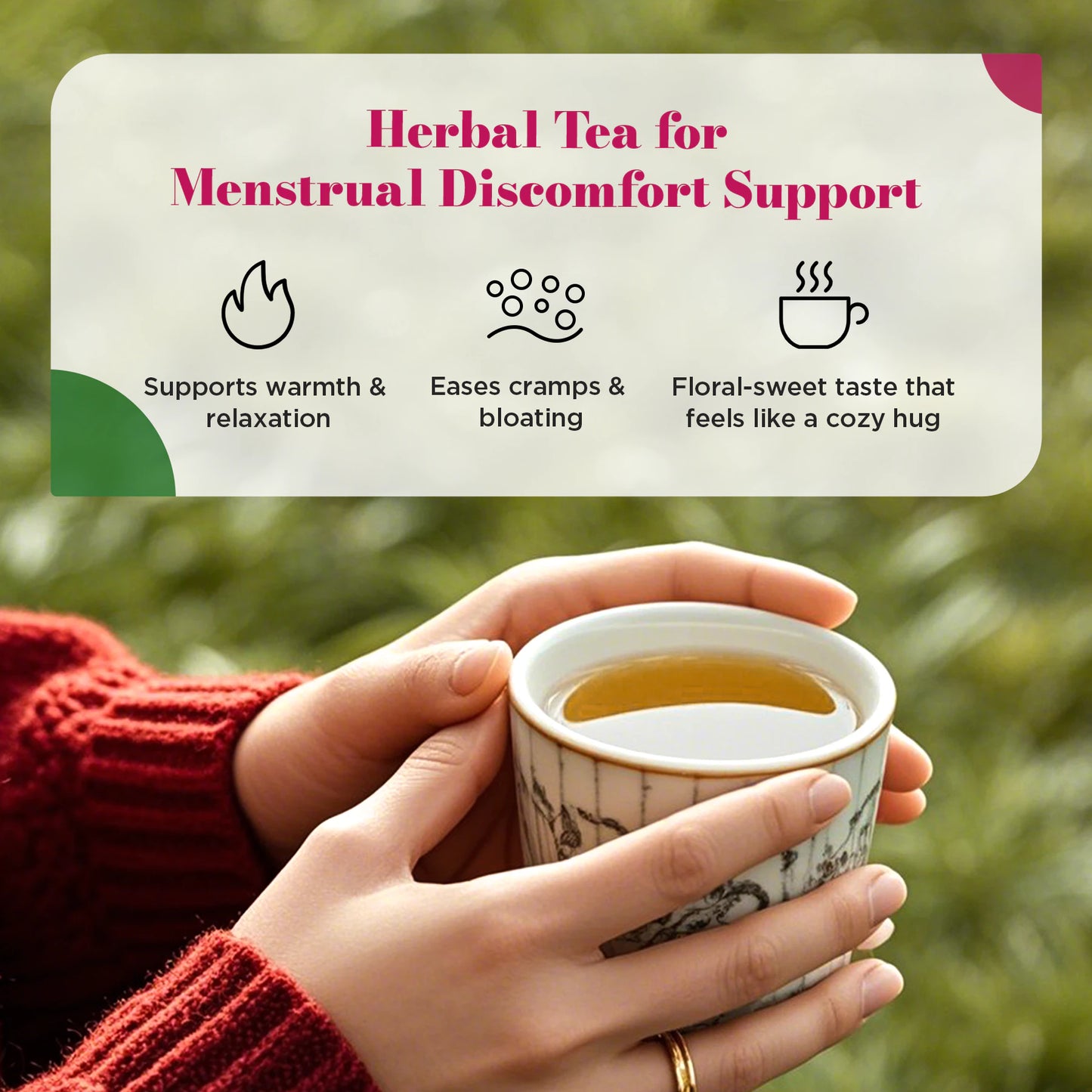
During a normal, typical cycle, a warm cup of tea can be an incredibly nurturing part of your self-care routine. Ease Period Comfort Tea combines longan, red dates, wolfberry, angelica, dried ginger, Pingyin roses, and peony petals in a pure, natural blend designed to be brewed and enjoyed warm during your cycle. It is positioned to help you feel warmer and more relaxed while your body completes its natural monthly process—serving alongside rest, gentle stretching, or a heating pad. It is strictly formulated for brewing and drinking, never for topical application or alternative uses. If you have questions about our ingredients, sourcing, or safety certifications, our team is always happy to assist at hello@laicuherb.com. Like any wellness habit, it works best as one supportive element among many, not as a standalone solution.
What Period Tea Cannot Replace
It is important to state clearly: no herbal tea, including period tea, is a substitute for professional medical evaluation, diagnosis, or treatment. These statements have not been evaluated by the FDA, and Ease Period Comfort Tea, like any herbal wellness product, is not intended to diagnose, treat, cure, or prevent any disease. This limit is vital. A comfort routine can help you feel cozy and relaxed during a demanding week, but it cannot explain why cramps have intensified, rule out conditions requiring clinical attention, or replace medical imaging, bloodwork, or physical exams. If your pain pattern has changed, do not let a comforting routine delay necessary care—the two work best in harmony, and enjoying one does not replace needing the other.
How to Prepare for a Medical Appointment
If you decide a clinical visit is warranted, preparing in advance can make your appointment significantly more effective. Track your cycle for a month or two beforehand, noting start and end dates, pain intensity day by day, and any unusual symptoms like fever, dizziness, or heavy bleeding. Note what remedies help—whether rest, topical heat, gentle movement, or a warm cup of period tea. Write down all medications and supplements you currently take, including over-the-counter pain relievers and herbal teas, so your provider has a complete overview. Prepare specific questions for your doctor, focusing on how your pain pattern has changed rather than a general complaint. This level of detail helps your clinician evaluate you efficiently and ensures you receive the most useful guidance.
Product Spotlight: Laicuherb Ease Period Comfort Tea

Frequently Asked Questions
1. How heavy is "too heavy" when it comes to period bleeding?
As a general guideline, soaking through a pad or tampon every hour for several consecutive hours, passing large blood clots, or bleeding that lasts significantly longer than your usual period are reasons to contact a clinician promptly. A warm period tea or heating pad has no impact on bleeding volume, so this symptom should always be evaluated directly by a professional.
2. Should fever or fainting during a period be treated as urgent?
Yes. Developing a fever alongside pelvic pain, or experiencing fainting or severe lightheadedness during your period, are clear signals that warrant prompt medical evaluation. These symptoms fall entirely outside what any comfort routine, including a period tea habit, is designed to address, so it is best to seek clinical care immediately.
3. What should I do if cramps keep getting worse cycle after cycle?
Persistent menstrual pain that worsens progressively over several months, rather than settling into a stable pattern, is always worth discussing with a healthcare provider, even if it has not reached emergency levels. Tracking your cycle details beforehand will help your clinician evaluate these changes more accurately.
Global Sourcing & Safety Standards
USDA Organic • Non-GMO • Vegan • NSF cGMP Certified • EU BRC Certified