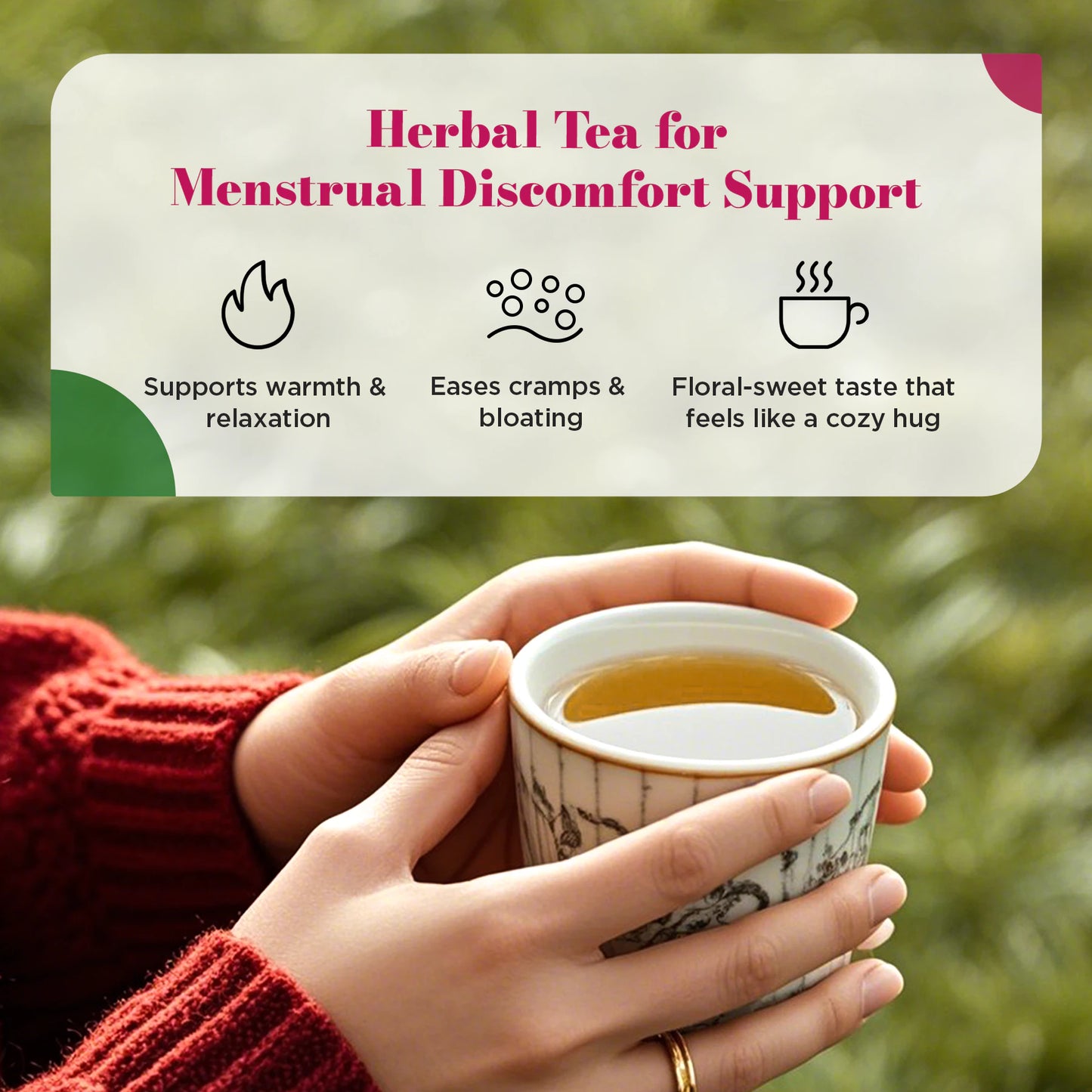
Period Tea and Pain Medication: Complementary Roles, Not Substitutes
HiherbsOfficial
When cramps arrive, many people reach for one of two familiar options: a warm herbal tea or the pain reliever in the medicine cabinet. The tempting question is which one is “better.” That framing is too simple. The two options do different jobs, and a realistic routine can make room for both without pretending they are interchangeable. Laicuherb Ease Period Comfort Tea is described as a caffeine-free herbal infusion containing longan, red dates, wolfberry, angelica, dried ginger, Pingyin roses, and peony petals. The supplied product information positions it as a wellness beverage for the menstrual phase. This article keeps that boundary clear: tea can add warmth, fluid, flavor, and a quiet pause. It is not a standardized analgesic and should not be presented as one.
Explorer Directory
- 01 Period Tea and Pain Medication Serve Different Roles →
- 02 How Common OTC Pain Medicines Work at a High Level →
- 03 What Warm Tea May Add: Hydration, Warmth, and Ritual →
- 04 What Evidence Says About Ginger and Menstrual Comfort →
- 05 Why Tea Cannot Replace Prescribed or OTC Treatment →
- 06 Building a Layered Comfort Routine →
- 07 Medication Questions to Ask a Pharmacist →
- 08 Product Spotlight: Laicuherb Ease Period Comfort Tea →
- 09 Frequently Asked Questions →
- 10 References →
Period Tea and Pain Medication Serve Different Roles
Menstrual cramps, or primary dysmenorrhea, are commonly linked to prostaglandins, signaling compounds that contribute to uterine contractions and pain. NSAIDs such as ibuprofen and naproxen reduce prostaglandin-related activity and are established treatments for menstrual pain when they are appropriate for the individual. Acetaminophen is a different type of pain reliever and should not be described as working through the same NSAID mechanism.
A period tea operates at a different level. A warm, caffeine-free cup may contribute to comfort through warmth, fluid, taste, and ritual. There is no reliable evidence that this seven-herb tea bag delivers a standardized dose capable of replacing pain medication or directly lowering prostaglandins.
Laicuherb Ease Period Comfort Tea includes dried ginger and angelica for a warming herbal character, longan, red dates, and wolfberry for natural sweetness, and Pingyin roses and peony petals for aroma and flavor. Those details describe the cup. They do not establish an analgesic effect for the finished blend. Pain medication addresses a pharmacological pain pathway. Period tea supports the surrounding comfort routine. Neither needs to replace the other.
How Common OTC Pain Medicines Work at a High Level
In many countries, NSAIDs are a common first-line option for primary dysmenorrhea. They inhibit cyclooxygenase enzymes involved in prostaglandin production, which can reduce the intensity of uterine contractions and pain. A Cochrane review found NSAIDs were more effective than placebo for dysmenorrhea, while no individual NSAID clearly outperformed the others across the available evidence [4].
Timing matters. ACOG notes that NSAIDs often work best when started at the first sign of pain or at the beginning of the period, and some people are advised to begin shortly before bleeding starts [7]. Follow the specific label, avoid doubling active ingredients, and ask a pharmacist whether the medicine is appropriate for your health history. Stomach ulcers, kidney disease, bleeding risks, allergies, pregnancy, medication interactions, and other conditions can change the answer.
Ibuprofen, naproxen, and mefenamic acid belong to the NSAID family, but they are not interchangeable instructions. Acetaminophen has different safety considerations and dosage limits. A period tea does not change those medication rules. A pharmacist can help you choose and time an OTC product safely.
What Warm Tea May Add: Hydration, Warmth, and Ritual
A warm drink can make an uncomfortable day feel less abrupt. It adds fluid, gives the hands something warm to hold, and creates a small pause between “I feel awful” and “I still have to get through the day.” Those are legitimate comfort functions. They are not the same as analgesia.
Heat therapy has stronger direct evidence for menstrual pain than a warm beverage. In a randomized study, continuous low-level topical heat was compared with ibuprofen, and the combination of heat and ibuprofen performed better than either intervention alone [5]. A mug of tea is not a heat patch. It does not deliver the same temperature, placement, or exposure, so the study should not be used to claim that drinking tea provides equivalent pain relief.
Laicuherb Ease Period Comfort Tea is made for brewing with hot water and drinking warm. Use it only as directed. Do not apply the tea externally, use the sachet internally, cook with it as a concentrated remedy, or turn it into an improvised treatment. A food or wellness beverage should stay a food or wellness beverage.
What Evidence Says About Ginger and Menstrual Comfort
Ginger is the most researched herb in this blend for menstrual discomfort, and the evidence deserves careful wording. Systematic reviews have reported that defined ginger preparations can reduce pain severity in primary dysmenorrhea compared with placebo [1][2][3][6]. Some analyses have reported results comparable to NSAIDs for pain outcomes, but the studies vary in design, dose, preparation, timing, and quality.
That distinction is crucial. The trials generally studied measured ginger powder or extract, not a mixed tea bag containing an unspecified amount of ginger alongside six other herbs. A result from a defined ginger preparation cannot be copied onto the finished Laicuherb Ease Period Comfort Tea without a product-specific trial.
Dried ginger is one of the seven listed ingredients in Laicuherb’s tea, bringing flavor and a warming character to the cup. The evidence makes ginger a reasonable ingredient to discuss, not a reason to promise that the tea treats cramps. If you want pain relief with established medication evidence, use the treatment that fits your health history and follow professional or label guidance.
Why Tea Cannot Replace Prescribed or OTC Treatment
The honest answer is straightforward: a period tea is a beverage. It is not a replacement for medication, diagnosis, or treatment recommended by a healthcare professional.
The reasons are practical. Tea bags contain variable amounts of active compounds, while medicines are formulated around standardized ingredients and dosing instructions. Severe or worsening cramps may signal endometriosis, adenomyosis, fibroids, pelvic infection, or another condition that a tea cannot identify. Replacing effective pain control with an unproven drink can also leave someone in unnecessary pain.
Laicuherb’s product positioning describes Laicuherb Ease Period Comfort Tea as a wellness beverage, and that is the appropriate claim boundary. If pain is severe, persistent, suddenly worse, disabling, or interfering with normal activities, arrange a medical evaluation. A warm cup can remain part of the day, but it is not the full plan.
Building a Layered Comfort Routine
A layered routine gives each tool a defined job. If an OTC pain reliever has been judged appropriate for you, take it according to the label and your pharmacist’s or clinician’s guidance. Use a heating pad or other evidence-based comfort measure as directed. Brew a period tea when you want a warm, caffeine-free pause. Add water, food, gentle movement, rest, and sleep according to what your body and schedule can manage.
The point is not to stack every possible remedy. It is to avoid asking one product to do everything. Medication may target pain. Heat may provide direct local comfort. Tea may make the surrounding routine calmer and easier to repeat. If one layer is not helping, adjust that layer instead of abandoning the whole plan.
Laicuherb Ease Period Comfort Tea can be brewed with hot water and sipped warm during the menstrual phase. For the current ingredient list and brewing directions, check the product page. Questions can also be sent to hello@laicuherb.com.
Medication Questions to Ask a Pharmacist
A pharmacist can help you select an OTC pain reliever, understand when to take it, check the maximum daily dose, and identify interactions with prescriptions or other OTC products. Ask whether an NSAID is appropriate for you, whether acetaminophen is a better option, and whether you should avoid combining certain products.
You can also ask about the tea. “Herbal” does not automatically mean interaction-free, especially when a person is taking medication, pregnant, breastfeeding, or managing a health condition. Bring the full ingredient list rather than describing it only as a period tea. The pharmacist can assess the actual botanicals and your specific situation. Before the conversation, note when the pain begins, how long it lasts, how heavy the bleeding is, whether the pain is disabling, and what you have already tried. Clear details make it easier to design a routine that is safe rather than merely busy.
Product Spotlight: Laicuherb Ease Period Comfort Tea

Frequently Asked Questions
When is the best time to drink period tea relative to pain medication?
Pain medication timing depends on the product and your health history. For NSAIDs, early use at the first sign of pain or around the beginning of the period is commonly recommended when the medicine is appropriate; follow the label and your pharmacist’s guidance [7]. A period tea serves a different role. You can drink Ease Period Comfort Tea when your period begins or before it if you enjoy preparing in advance. The two do not usually require a fixed spacing schedule, but ask a pharmacist about your specific medication and ingredients if you have any uncertainty.
Can I combine period tea with my usual pain medication?
Do not assume that every combination is automatically safe. A cup of tea may contain lower and more variable botanical amounts than a concentrated supplement, but “tea” does not eliminate interaction questions. Check with a healthcare professional if you take prescription medication, are pregnant or breastfeeding, have a health condition, or use other supplements. Share the full ingredient list for Ease Period Comfort Tea rather than relying on the product name alone.
What should I do if my period pain stays severe even with tea and medication?
Arrange a medical evaluation. Pain that is disabling, worsening over several cycles, suddenly different, or accompanied by heavy bleeding, vomiting, fainting, fever, pain outside the period, or pain during sex should not be managed indefinitely at home. These patterns can point to an underlying condition that needs assessment. Period tea may support comfort on ordinary days, but it is not designed to investigate or treat severe menstrual pain.
Global Sourcing & Safety Standards
HALAL • HACCP • ISO-FSSC • SGS Analyzed • USDA Organic Sourcing
References
- Moshfeghinia, R., Salmanpour, N., Ghoshouni, H., Gharedaghi, H., Zare, R., Cramer, H., Heydarirad, G., & Pasalar, M. (2024). "Ginger for pain management in primary dysmenorrhea: A systematic review and meta-analysis." Journal of Integrative and Complementary Medicine, 30(11), 1016–1030.
- Daily, J. W., Zhang, X., Kim, D. S., & Park, S. (2015). "Efficacy of ginger for alleviating the symptoms of primary dysmenorrhea: A systematic review and meta-analysis of randomized clinical trials." Pain Medicine, 16(12), 2243–2255.
- Chen, C. X., Barrett, B., & Kwekkeboom, K. L. (2016). "Efficacy of oral ginger (Zingiber officinale) for dysmenorrhea: A systematic review and meta-analysis." Evidence-Based Complementary and Alternative Medicine, 2016, 6295737.
- Marjoribanks, J., Ayeleke, R. O., Farquhar, C., & Proctor, M. (2015). "Nonsteroidal anti-inflammatory drugs for dysmenorrhoea." Cochrane Database of Systematic Reviews, 2015(7), CD001751.
- Akin, M. D., Weingand, K. W., Hengehold, D. A., Goodale, M. B., Hinkle, R. T., & Stauffer, J. W. (2001). "Continuous low-level topical heat in the treatment of dysmenorrhea." Obstetrics & Gynecology, 97(3), 343–349.
- Negi, R., Sharma, S. K., Gaur, R., Bahadur, A., & Jelly, P. (2021). "Efficacy of ginger in the treatment of primary dysmenorrhea: A systematic review and meta-analysis." Cureus, 13(3), e13743.
- American College of Obstetricians and Gynecologists. "Dysmenorrhea: Painful periods." Patient guidance.