Omega-7 Supplement Safety: Contraindications and Medication Questions
HiherbsOfficial
Contents
- → Why "Natural" Does Not Mean Safe for Everyone
- → What the Evidence Currently Shows on Safety
- → The Knowledge Gaps That Still Matter
- → Medications and Procedures: What to Disclose
- → Pregnancy, Breastfeeding, Allergies, and Digestive Sensitivity
- → What Quality Testing Does — and Does Not — Tell You
- → When to Contact a Clinician
- → Conclusion
- → FAQ
The word "natural" does a lot of marketing work that the science rarely backs up. A supplement can come from a plant, be carefully extracted, and still present real questions for someone taking blood thinners, managing blood pressure, or navigating pregnancy. Those questions are not answered by an organic certification or a clean extraction method. They are answered by a conversation with a pharmacist or clinician who knows your full picture.
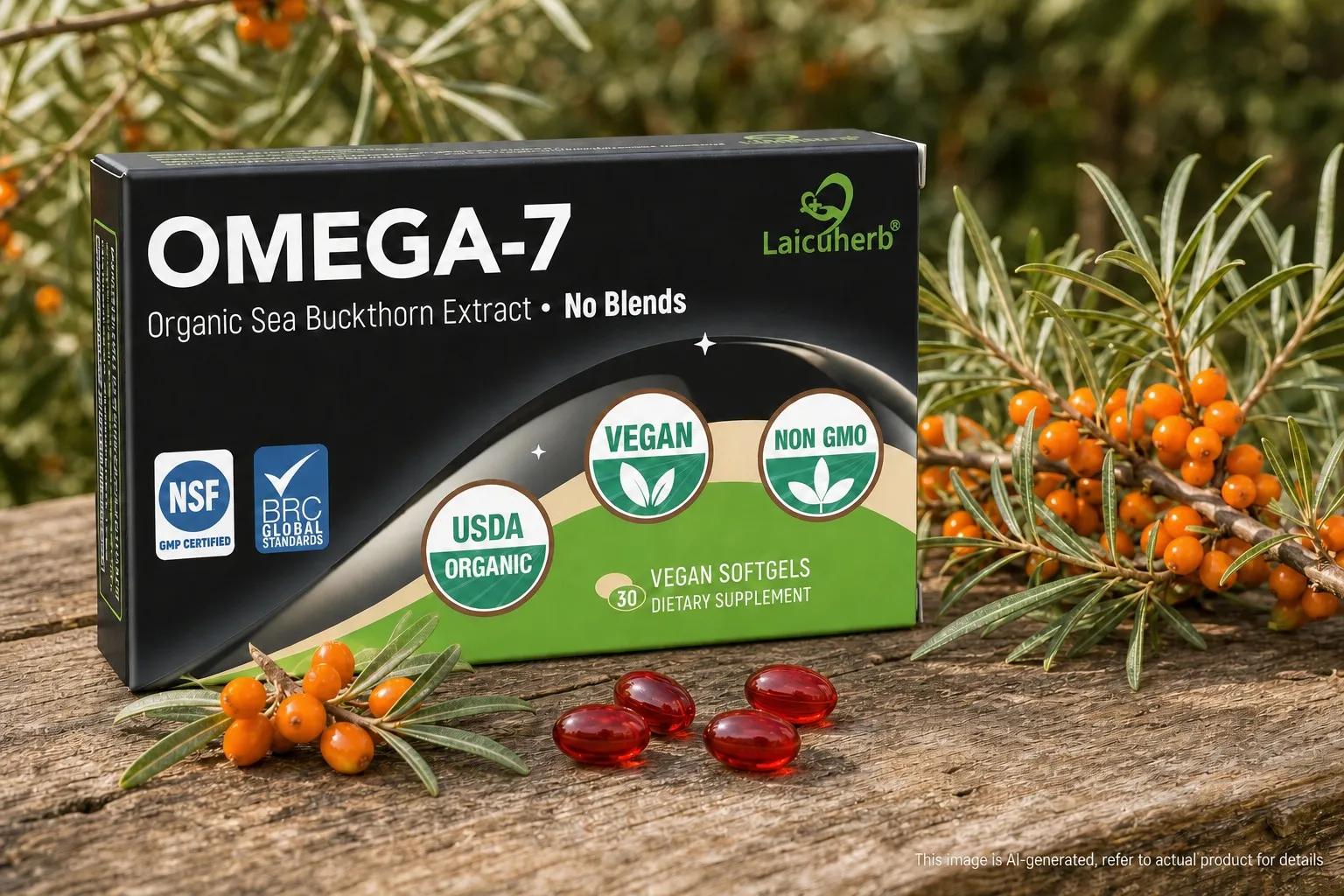
Laicuherb Omega 7 Sea Buckthorn Oil Capsules are vegan capsules containing whole sea buckthorn fruit oil, processed using Supercritical CO₂ extraction. The product's ingredient story centres on palmitoleic acid (Omega-7) and the broader fatty-acid profile of sea buckthorn fruit oil. Those are factual product details — they describe what is in the capsule and how it was made. They do not, on their own, answer whether this supplement is appropriate alongside a given medication, during pregnancy, or before a scheduled procedure.
This guide covers what is currently understood about sea buckthorn oil safety, where genuine knowledge gaps exist, and which situations warrant a professional safety check before starting. It treats this product as a dietary supplement — not as a treatment for dry eyes, dry mouth, skin disease, cardiovascular disease, or any other clinical condition.
Why "Natural" Does Not Mean Safe for Everyone
There is no single safety verdict that covers every person, every preparation, every dose, and every combination of medicines or health conditions. Consumer safety references for oral sea buckthorn oil note that short-term safety data exist but remain limited, and specifically flag insufficient reliable data for pregnancy and breastfeeding. The same sources raise possible concerns around bleeding risk — particularly for people with bleeding disorders or those already taking medicines that affect clotting — and potential effects on blood pressure [1].
Citing these cautions does not mean that Laicuherb's product will cause those outcomes for most users. It means the evidence is not complete enough to dismiss those questions in advance. The right approach is individual assessment, not a blanket assumption in either direction.
The practical starting point
Before opening a new supplement, review the Supplement Facts label. List every prescription, over-the-counter medicine, and other supplement you currently take. If a medication, a health condition, a planned procedure, a known allergy, or a pregnancy or breastfeeding situation applies to you, bring that list to a pharmacist or clinician rather than relying on ingredient quality alone. Purity confirms what is in the bottle; it does not determine how it behaves in your body.
What the Evidence Currently Shows on Safety
Sea buckthorn oil has appeared in food research, animal studies, and some human trials, but those findings do not form a single, unified safety conclusion. The plant yields several distinct preparations — fruit oil, seed oil, pulp extract, and whole-berry concentrates — and each carries a different fatty-acid and phytonutrient composition. Treating them as interchangeable is a category error that appears in a lot of popular wellness writing.
A 2009 preclinical study examined Supercritical CO₂ sea buckthorn seed oil applied to burn wounds in rats [2]. The oral and topical safety observations in that paper belong to an animal model — they provide useful background context but cannot be extrapolated to establish human surgical safety, medication compatibility, or clinical dosing guidelines. That distinction is not a technicality; animal toxicity data and human pharmacology answer genuinely different questions.
The Laicuherb product uses whole sea buckthorn fruit oil with Supercritical CO₂ extraction. Knowing the plant part and extraction method helps a consumer understand the product's source and composition. It does not establish an absence of interactions, confirm universal tolerability, or certify a clinical outcome. If a new supplement produces a new or persistent symptom — digestive discomfort, skin reaction, dizziness — stopping the product and seeking professional guidance is the appropriate first response, not increasing the dose.
The Knowledge Gaps That Still Matter
The honest summary of the current evidence base: long-term safety data for oral Omega-7 supplements across different populations, doses, and medication combinations is limited. Researchers have not yet fully characterised how different sea buckthorn preparations are absorbed, how fatty-acid profiles vary across products, or how chronic use affects people managing cardiovascular conditions, bleeding disorders, or immune-related diseases. Age-related differences and the specific safety profile during pregnancy have not been adequately studied.
There is also a gap between ingredient research and finished-product outcomes. A clinical trial of a purified palmitoleic acid preparation does not automatically describe what happens with a whole-fruit-oil capsule. A short-term safety observation from an animal study does not cover years of daily supplementation in a human population. A documented traditional use of sea buckthorn berries in food contexts does not resolve a pharmacokinetic question about a concentrated oral supplement.
These gaps do not mean the product is dangerous — they mean that individual review matters more than a general reassurance. The right operating posture is: follow the label, do not self-escalate the dose to accelerate results, keep a current record of every supplement and medicine you take, and revisit the picture with a clinician if your health situation or prescriptions change.
Medications and Procedures: What to Disclose
The NIH Office of Dietary Supplements notes that certain supplements can affect bleeding risk or alter the body's response to anaesthesia, and explicitly recommends disclosing all supplements to surgical and anaesthesia teams ahead of any procedure [3]. That guidance applies to dietary supplements broadly — it is not a specific indictment of sea buckthorn oil, but it is a real reason to volunteer this information rather than waiting to be asked.
When speaking with a pharmacist or prescribing clinician, specifically raise the following categories:
- Anticoagulants and antiplatelet medicines — including warfarin, direct oral anticoagulants, aspirin, and clopidogrel
- Blood-pressure medications — any medicine targeting hypertension or cardiovascular function
- Diabetes medications — including insulin and oral hypoglycaemics
- Immunomodulating therapies — medicines for autoimmune conditions or post-transplant regimens
- Narrow-therapeutic-index drugs — medicines where small concentration changes carry significant risk
Do not assume that timing a supplement dose away from a prescription resolves a potential interaction. Many interactions are metabolic or pharmacodynamic — they do not depend on the two substances being taken at the same time.
A note on pre-surgery timing
Generic online rules such as "stop all Omega-7 supplements two weeks before surgery" are not a substitute for a clinical instruction. Tell the surgical team, the anaesthetist, and your dentist what you are taking, provide the label and dose, and follow their specific guidance. Some practitioners will advise a pause; others may need additional information first. The appropriate stop window — if any — is a clinical decision, not a product specification.
Pregnancy, Breastfeeding, Allergies, and Digestive Sensitivity
Pregnancy and breastfeeding set a higher evidence threshold for any supplement that has not been specifically studied in those populations. Current references indicate that reliable safety data for concentrated sea buckthorn oil in pregnant or breastfeeding individuals is limited [3]. Until that evidence exists, the appropriate step is a conversation with an obstetric clinician, midwife, or pharmacist — not a reliance on the product's plant origin. A supplement is not a prenatal vitamin, and it cannot substitute for prescribed treatments or individualised clinical nutrition advice.
Known allergies deserve a careful label check. Review the exact plant source, capsule shell materials, and the full ingredient list. A person with a documented berry allergy or sensitivity to Rosaceae or Elaeagnaceae plant families should not assume that a vegan softgel is automatically suitable. Allergic responses can range from mild — itching, localised hives — to serious: widespread urticaria, angioedema, vomiting, or respiratory distress. Breathing difficulty, swelling of the face or throat, fainting, or symptoms escalating quickly require urgent emergency care, not watchful waiting.
Digestive tolerance is individual. Some people experience nausea, loose stools, abdominal cramping, or reflux when starting a new oil-based supplement — responses that may be dose-related, preparation-related, or simply a sign of incompatibility. If gastrointestinal symptoms appear and persist beyond the first few days, or are accompanied by any other concerning change, stop the supplement and consult a healthcare professional rather than adjusting the dose on your own.
What Quality Testing Does — and Does Not — Tell You
Batch-level quality documents — a Certificate of Analysis, an ISO-related manufacturing certificate, or a production traceability record — address a specific and bounded question: does this batch meet the stated manufacturing specification? They confirm identity, test for specified actives and contaminants, and provide traceability. That is genuinely useful for evaluating what is in the capsule.
What those documents cannot do is answer a medical question. A clean COA does not determine how the supplement interacts with a specific medication, whether it is appropriate during pregnancy, or whether it is safe for someone with a clotting disorder. If a product page mentions CE documentation alongside quality records, it is worth confirming what the certification actually applies to — and understanding that FDA does not pre-approve dietary supplements for safety or effectiveness before they reach the market [3]. Quality seals reflect manufacturing standards; they are not clinical authorisations.
| Document type | What it answers | What it does not answer |
|---|---|---|
| Certificate of Analysis (COA) | Batch identity, active levels, contaminant testing | Drug interactions, clinical suitability |
| Manufacturing / ISO certificate | Production process standards, traceability | Safety in pregnancy or around surgery |
| CE marking (if listed) | Applicable only to the scope of the specific regulation cited | Not equivalent to FDA approval or clinical safety clearance |
When to Contact a Clinician
Before starting — check if you have:
- Any prescription medication
- Anticoagulant or antiplatelet therapy
- A diagnosed bleeding disorder
- Blood-pressure concerns or treatment
- A procedure or surgery scheduled
- Pregnancy or breastfeeding
- A known plant or berry allergy
After starting — seek help if you notice:
- Persistent gastrointestinal symptoms
- Unusual bruising or unexpected bleeding
- Marked dizziness or blood-pressure changes
- New skin reactions or hives
- Any symptom that concerns or surprises you
Seek urgent care immediately for:
Breathing difficulty · Facial or throat swelling · Fainting or sudden severe weakness · Uncontrolled bleeding · Rapidly worsening symptoms of any kind
Finally: do not use an Omega-7 supplement to self-manage chronic dry eyes, dry mouth, skin disease, digestive disease, cardiovascular conditions, or any other ongoing health concern. These are not categories where a supplement replaces diagnosis and treatment. If symptoms persist, what they need is an evaluation of their cause — and a clinician who can decide whether a supplement belongs in the management plan at all.
Conclusion
Key Points
- No oral Omega-7 supplement carries a universal safety clearance. Safety is individual and depends on medications, health status, life stage, and allergies.
- Consumer safety references flag limited data for pregnancy and breastfeeding, and possible concerns around bleeding risk and blood pressure for relevant subgroups [1].
- Available preclinical data (animal models) provide background context — they do not establish human surgical safety or medication compatibility [2].
- Quality documents confirm batch specifications; they do not answer clinical suitability questions or replace a pharmacist's drug-interaction review [3].
- Disclose all supplements to surgical and anaesthesia teams, and follow their specific guidance on timing — not a generic internet rule.
Responsible supplementation starts with a question: is this product appropriate for this person, alongside these medicines, at this stage of life? Laicuherb Omega 7 Sea Buckthorn Oil Capsules are vegan whole sea buckthorn fruit oil capsules made with Supercritical CO₂ extraction. That describes what they are. For what they mean for your individual situation, a pharmacist or clinician who knows your health record is a far more reliable guide than any ingredient description — including this one.
Frequently Asked Questions
Q1: What side effects are possible with this Omega-7 supplement?
Product-specific side-effect frequency data has not been established in the information reviewed here. Like any new oral oil-based supplement, sea buckthorn capsules can occasionally cause digestive symptoms — nausea, loose stools, or abdominal discomfort — particularly in the early days of use. Allergic reactions are also possible. If a symptom persists, recurs, or is accompanied by anything that concerns you, discontinue the product and consult a pharmacist or clinician. Breathing difficulty, facial swelling, or rapidly worsening symptoms warrant emergency care, not a wait-and-see approach.
Q2: Do I need to stop this supplement before surgery?
The right answer to that question comes from your surgical and anaesthesia team, not from an internet timeline. General NIH guidance recommends disclosing all supplements before a procedure because some can affect bleeding or anaesthetic response [3]. The preclinical sea buckthorn study sometimes cited in this context used an animal model and seed oil — it does not define a stop window for human surgical patients taking a fruit-oil capsule [2]. Tell the team what you take, provide the label and dose, and follow their clinical instruction exactly.
Q3: Is long-term use alongside prescription medication safe?
Product-specific long-term interaction data is limited, which is precisely why a pharmacist or prescribing clinician should review the combination before it continues indefinitely. Bring the full Supplement Facts panel, your current dose, and a list of all other supplements and prescriptions to that conversation. Pay particular attention to anticoagulants, antiplatelet therapy, blood-pressure medications, diabetes medicines, and any drug with a narrow therapeutic margin. A clean batch report tells you what is in the product — it does not tell you how that product behaves alongside a specific prescription over months or years.
Available at Hiherbs
Laicuherb Omega 7 Sea Buckthorn Oil Capsules
Vegan whole sea buckthorn fruit oil · Supercritical CO₂ extraction · Naturally occurring Omega-3, 6, 7 & 9 · Plant-based capsule
For product specifications, ingredient details, sourcing information, or batch documents: hiherbs0129@gmail.com
For questions about personal medical suitability, bring the label to your healthcare provider.
References
- WebMD. (2026). Sea buckthorn: Overview, uses, side effects, precautions, interactions, dosing and reviews. Accessed September 2026.
- Upadhyay, N. K., Kumar, R., Mandotra, S. K., Meena, R. N., Siddiqui, M. S., Sawhney, R. C., & Gupta, A. (2009). Safety and healing efficacy of sea buckthorn (Hippophae rhamnoides L.) seed oil on burn wounds in rats. Food and Chemical Toxicology, 47(6), 1146–1153. https://pubmed.ncbi.nlm.nih.gov/19425187/
- National Institutes of Health, Office of Dietary Supplements. (2023). Dietary Supplements: What You Need to Know. Updated January 4, 2023. https://ods.od.nih.gov/factsheets/WYNTK-Consumer/
Original article sourced from Laicuherb.com. Adapted and republished for Hiherbs.