Luteal Phase Tea vs Other Sleep Aids: Comparing Bedtime Roles
HiherbsOfficial
The week before a period can make bedtime feel oddly complicated. You may be tired but restless, ready for sleep but still carrying the day in your shoulders. That experience is real, but it does not automatically mean you need a stronger sleep product.
This is where the phrase luteal phase tea enters the conversation. It describes a cycle-focused herbal beverage used during the second half of the menstrual cycle. It is not a clinical category, and it is not a softer name for a sleeping pill. The useful question is less “Which product wins?” and more “What role is each product actually meant to play?”
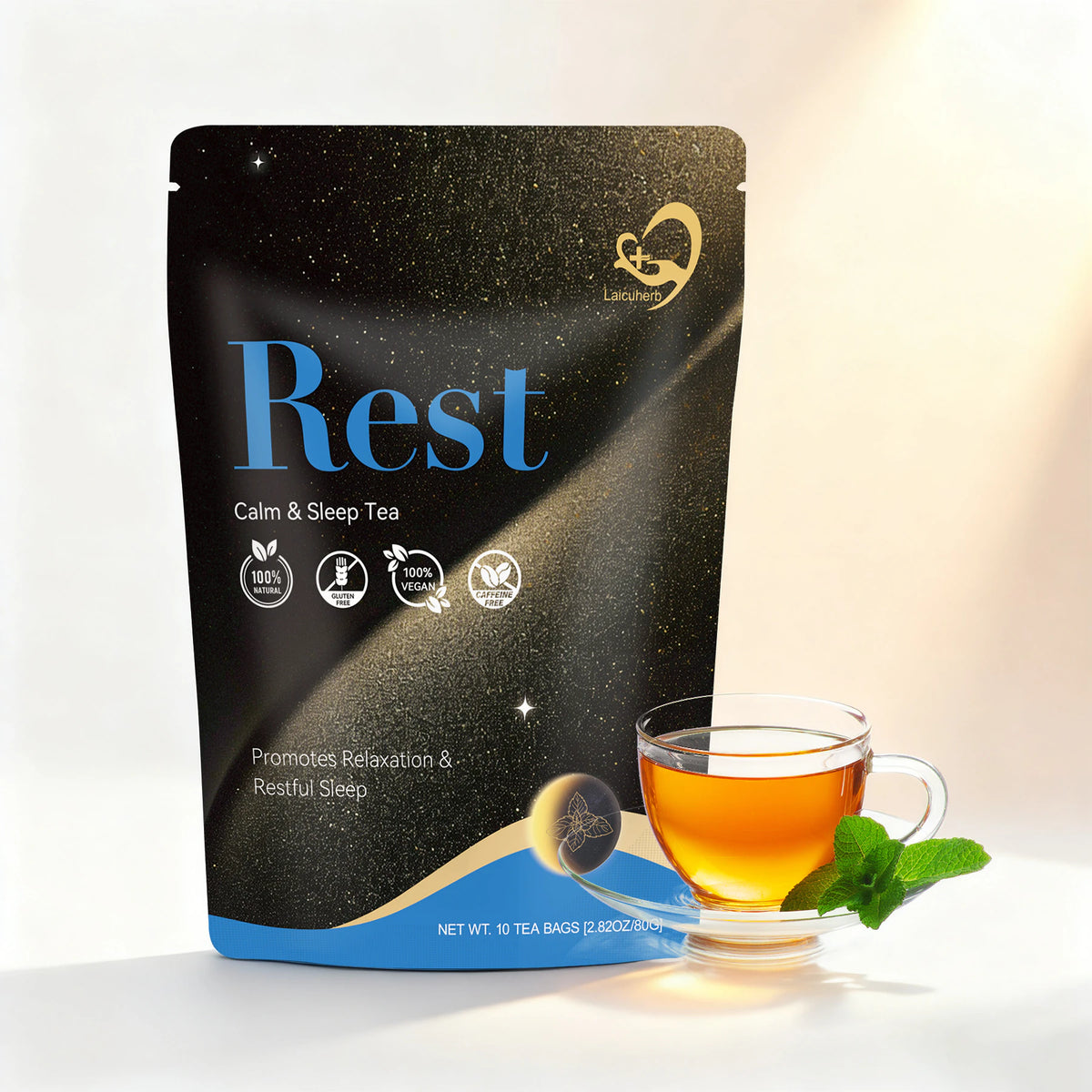
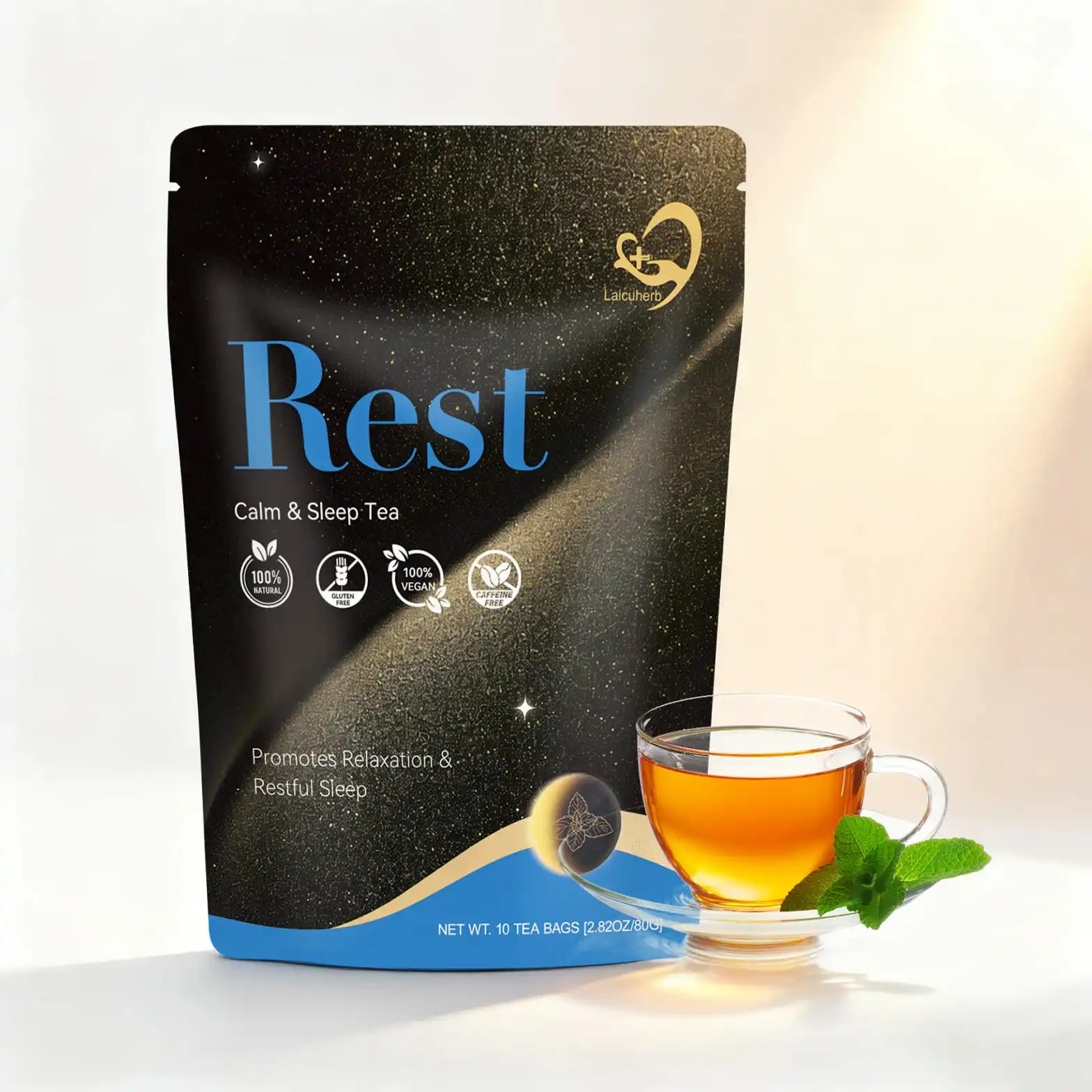
Hiherbs presents Rest Calm & Sleep Tea on the ritual side of that line. It is a warm herbal infusion made with cinnamon, nettle leaf, raspberry fruit, ginger, spearmint, lemongrass, ashwagandha, and radix asparagi. This article compares that kind of evening beverage with melatonin supplements, magnesium products, over-the-counter antihistamines, and prescription sleep medicines without pretending that they are interchangeable.
In this guide
Quick answer →
What a luteal phase tea offers →
What “sleep aid” can mean →
Comparison table →
Choosing by goal and medication context →
Why combining products needs advice →
How Rest Tea fits a routine →
Conclusion →
FAQ →
Quick Answer: These Options Serve Different Bedtime Roles
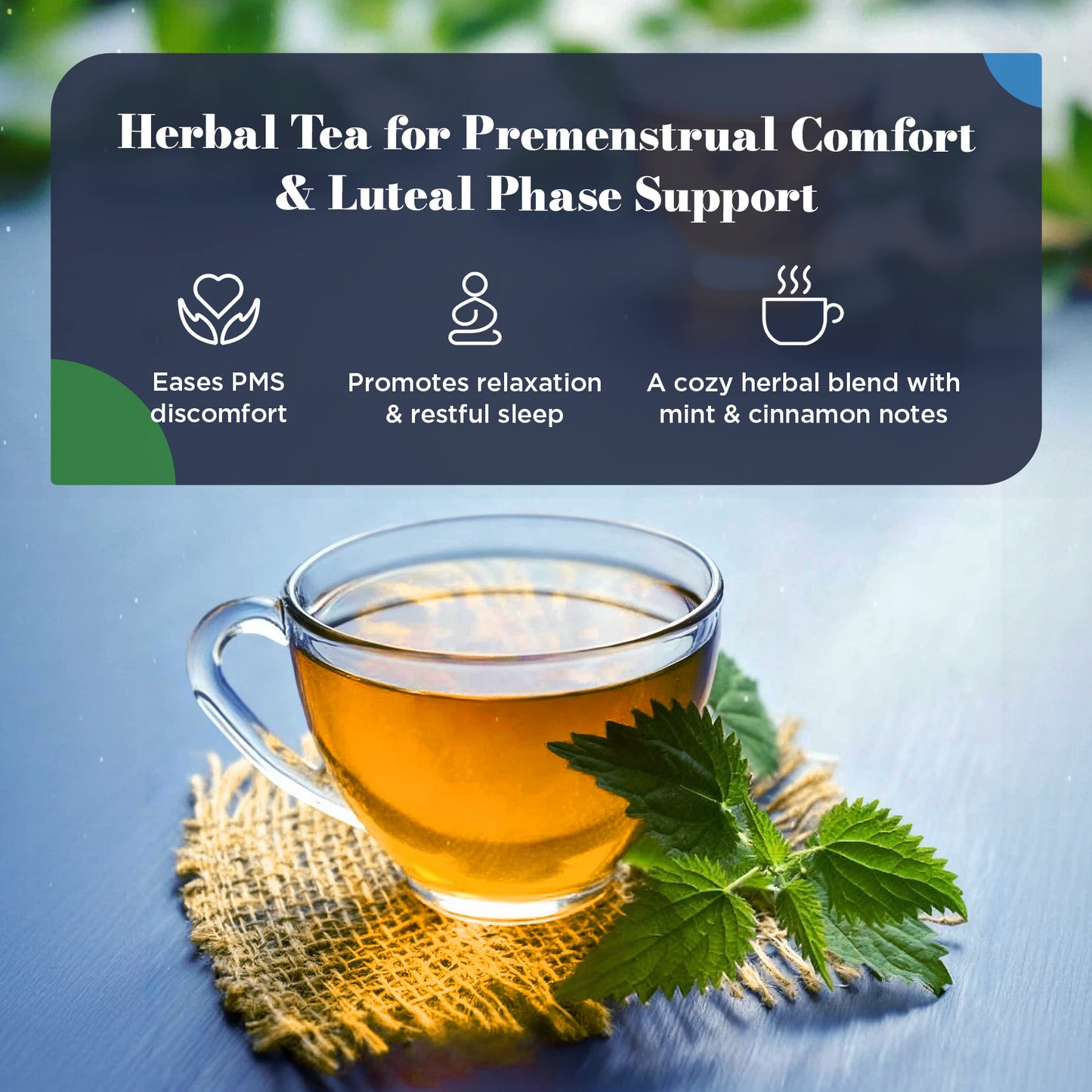
A luteal phase tea is a cycle-timed herbal beverage. Rest Calm & Sleep Tea is designed to be brewed and sipped as part of an evening wind-down routine, particularly during the second half of the menstrual cycle. Its ingredient list does not establish that the blend treats insomnia, PMS, pain, anxiety, or any other condition, and there is no clinical trial showing that this specific blend treats a sleep disorder.
Melatonin and magnesium are dietary supplements with different ingredients, labels, evidence, and safety questions. An over-the-counter antihistamine is a drug product intended for limited use under its label directions. Prescription sleep medicines are medical treatments selected for a specific patient and situation. A warm tea can be part of a bedtime ritual; it should not be presented as a substitute for evaluation or treatment when sleep problems persist.
The shortest honest answer is this: choose by purpose, not by the word “sleep” on the package. Check the full Rest Tea ingredient list and product documentation, and speak with a pharmacist or clinician before adding any herbal product if you take medication, are pregnant or nursing, or have a chronic condition.
What a Luteal Phase Tea Is Designed to Offer
A luteal phase tea is generally positioned as a beverage for the post-ovulation part of the menstrual cycle, ending when the next period begins. Cycle timing is not identical for every person, so “one to two weeks before a period” is a rough consumer description rather than a prescription schedule. Some people notice changes in sleep, mood, appetite, bloating, or physical comfort during this time. The American College of Obstetricians and Gynecologists’ PMS information lists sleep problems among possible premenstrual symptoms, while also making clear that persistent or severe symptoms deserve appropriate care.
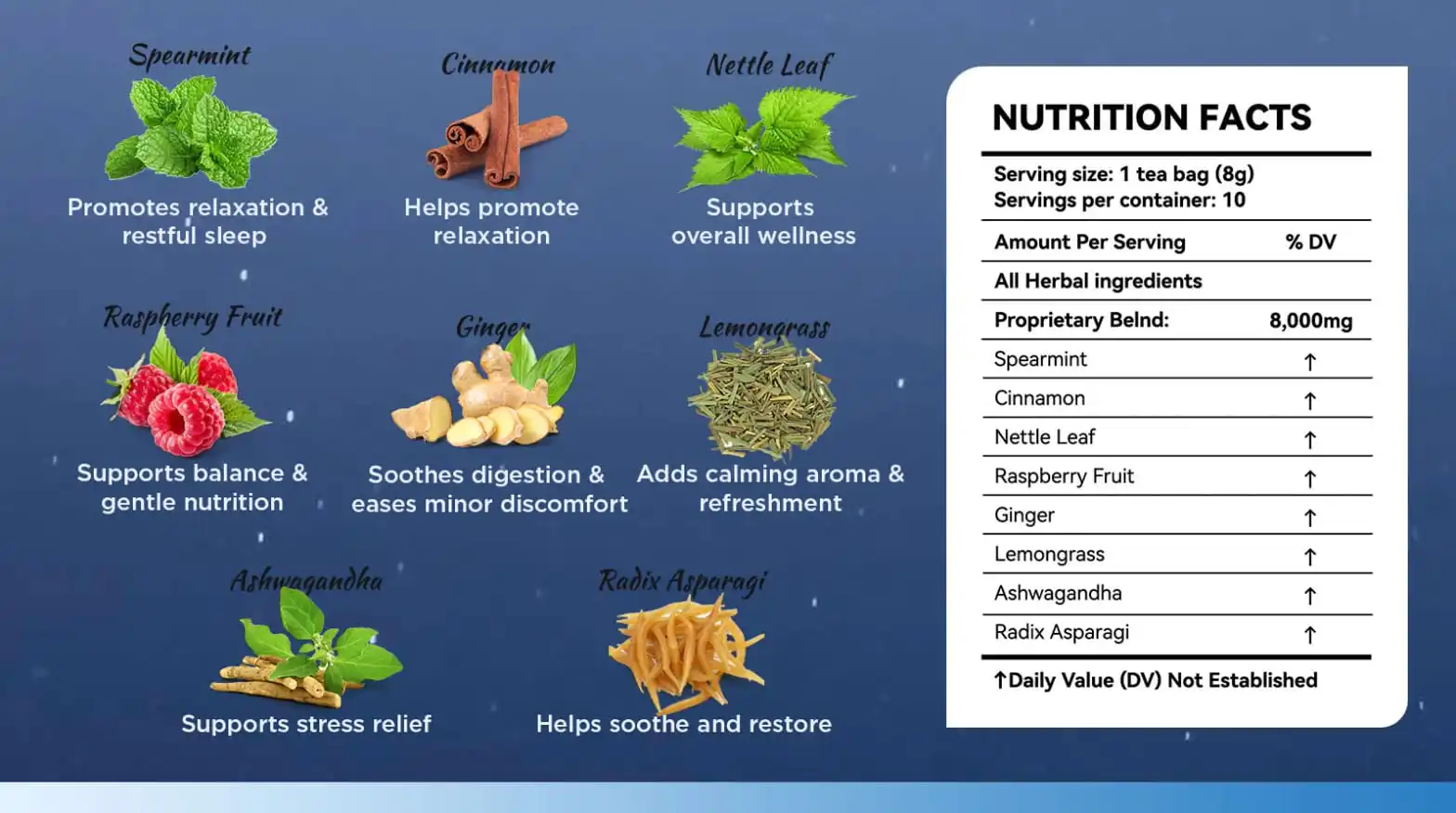
Rest Calm & Sleep Tea is a food-style herbal infusion sold in 8 g sachets, with ten sachets per pack according to the product information provided for this article. The blend contains cinnamon, nettle leaf, raspberry fruit, ginger, spearmint, lemongrass, ashwagandha, and radix asparagi. Those ingredients may have a place in traditional medicine and in a personal comfort ritual. That history is not the same as proof that the finished blend improves sleep or relieves premenstrual symptoms.
This distinction matters because “calming” is often used as a marketing shortcut. A pleasant taste, warmth, familiar preparation, and a screen-free pause may help a person create a calmer transition into bed. That is a behavioral and sensory role. It is not evidence that the tea changes hormones, lowers cortisol, treats pain, or corrects the cause of insomnia.
The product should be brewed as directed and consumed as a beverage. It should not be applied to the skin, used as a cooking ingredient, or treated as a concentrated extract. Read the current label for serving instructions, allergen information, warnings, and storage details. Product quality documents such as a batch-level certificate of analysis can help answer questions about identity and specifications, but they do not prove a clinical sleep benefit. The FDA explains its role in dietary supplement oversight; a product’s regulatory category should never be confused with FDA approval.
What “Sleep Aid” Can Mean: Beverage, Supplement, or Medication
“Sleep aid” is an umbrella phrase, not a single level of evidence. A warm herbal tea is a beverage. A melatonin gummy, magnesium glycinate capsule, or valerian product is usually sold as a dietary supplement, with its own label and evidence limits. An over-the-counter antihistamine is a drug product with active ingredients, warnings, and directions. A prescription sleep medicine is selected and monitored within a medical context.
The category changes what a consumer should ask. For a tea, the practical questions include what is in the blend, whether the ingredients are identified, how the product is prepared, and whether the ritual is comfortable at night. For a supplement, the questions include the actual amount per serving, product quality, possible interactions, and whether evidence exists for the specific goal. For a drug, the label, contraindications, duration of use, and interaction warnings matter. For chronic insomnia, the central question is not which product sounds natural. It is why sleep is failing and whether the person needs an evaluation.
A food or herbal product is also not automatically safer because it is natural. The FDA advises consumers to discuss dietary supplements with a doctor, pharmacist, or other health professional because supplements can interact with medicines or other supplements. Rest Tea contains ashwagandha, an ingredient that warrants extra care when someone is taking medication or managing a health condition. The exact product, dose, preparation, and personal health history all matter.
Comparison Table: Evidence, Onset, Use, and Risks
The table below gives a high-level comparison. It is educational, not a dosing guide, and it does not recommend combining products. “Onset” is intentionally described in broad terms because product formulation, dose, individual response, and the reason for use can change the experience.
| Category | Evidence base | Onset | Common use | Considerations |
|---|---|---|---|---|
| Luteal phase tea, such as Rest Tea | Traditional herbal use and a beverage-based bedtime ritual; no clinical evidence that this specific blend treats insomnia | Ritual and sensory effect may be noticed during the evening; no established sleep-treatment onset | Warm beverage during the second half of the cycle | Not an insomnia treatment; check ingredients, allergies, pregnancy or nursing status, and possible herb–drug interactions |
| Melatonin supplement | Evidence is more relevant to circadian-timing problems such as jet lag than to every form of chronic insomnia; product quality and dose vary | Product- and person-dependent | Short-term or situation-specific use, depending on professional advice and label | Interactions, side effects, timing, and long-term uncertainty still matter |
| Magnesium supplement | Evidence depends on magnesium status, formulation, population, and the sleep problem being studied; it is not a universal sleep solution | Product- and person-dependent | Supplement use when appropriate for the individual | Excess supplemental magnesium can cause gastrointestinal effects and may interact with medicines |
| OTC antihistamine | Drug-label use may include occasional sleeplessness for specific products | Often sedating, but individual response varies | Occasional, short-term use according to the label | Next-day drowsiness, alcohol warnings, driving warnings, duplicate ingredients, and interactions matter |
| Prescription sleep medication | Clinical trials and practice guidelines apply to particular medicines, diagnoses, and patients—not to the category as a whole | Medicine- and patient-dependent | Under medical supervision for an identified sleep problem | Prescription status, side effects, interactions, tolerance or dependence concerns, and follow-up all matter |
The U.S. FDA explains that dietary supplements are not approved for safety and effectiveness before marketing. A certificate of analysis, manufacturing standard, or facility certification can support traceability and quality control, but none of those documents should be described as proof that a product treats insomnia. For clinical context, readers can review the AASM chronic insomnia pharmacologic guideline.
How to Choose Based on Goal and Medication Context
Start by naming the problem precisely. If the goal is a warm, low-stimulation evening ritual during the luteal phase, a herbal tea may fit that routine. If the goal is to address repeated difficulty falling asleep, frequent waking, early waking, or daytime impairment, a beverage is not enough information to solve the problem. If symptoms track the menstrual cycle and disrupt work, relationships, or daily life, record the pattern and discuss it with a qualified healthcare professional. PMS and PMDD are not interchangeable labels, and a product page is not a diagnostic tool.
Anyone taking prescription medicines, sedatives, anxiety medicines, sleep medicines, hormonal treatment, anticoagulants, thyroid medication, or other regular products should ask a pharmacist or clinician before using an herbal blend. The same caution applies to pregnancy, nursing, liver or thyroid conditions, autoimmune conditions, surgery planning, and known allergies.
For product and sourcing questions, contact the official Hiherbs support channel. Use a healthcare professional for individualized medication or medical advice. That division keeps a comforting ritual from being mistaken for treatment.
Why Combining Products Requires Professional Advice
Combining products because they all use the word “sleep” is not a reliable safety strategy. A tea blend, melatonin product, magnesium supplement, antihistamine, and prescription medicine can have different active ingredients and different effects on alertness, digestion, blood pressure, or medication metabolism. Ashwagandha also deserves specific review when sedating medicines or other health treatments are involved.
Do not use this article to build a combination plan or to choose a dose. A pharmacist can review the exact product labels, prescription list, supplement amounts, allergies, and health history. An example DailyMed nighttime label illustrates why drowsiness, alcohol, driving, and persistent sleeplessness warnings must be checked for the exact product.
How Rest Tea Fits a Non-Medical Bedtime Routine
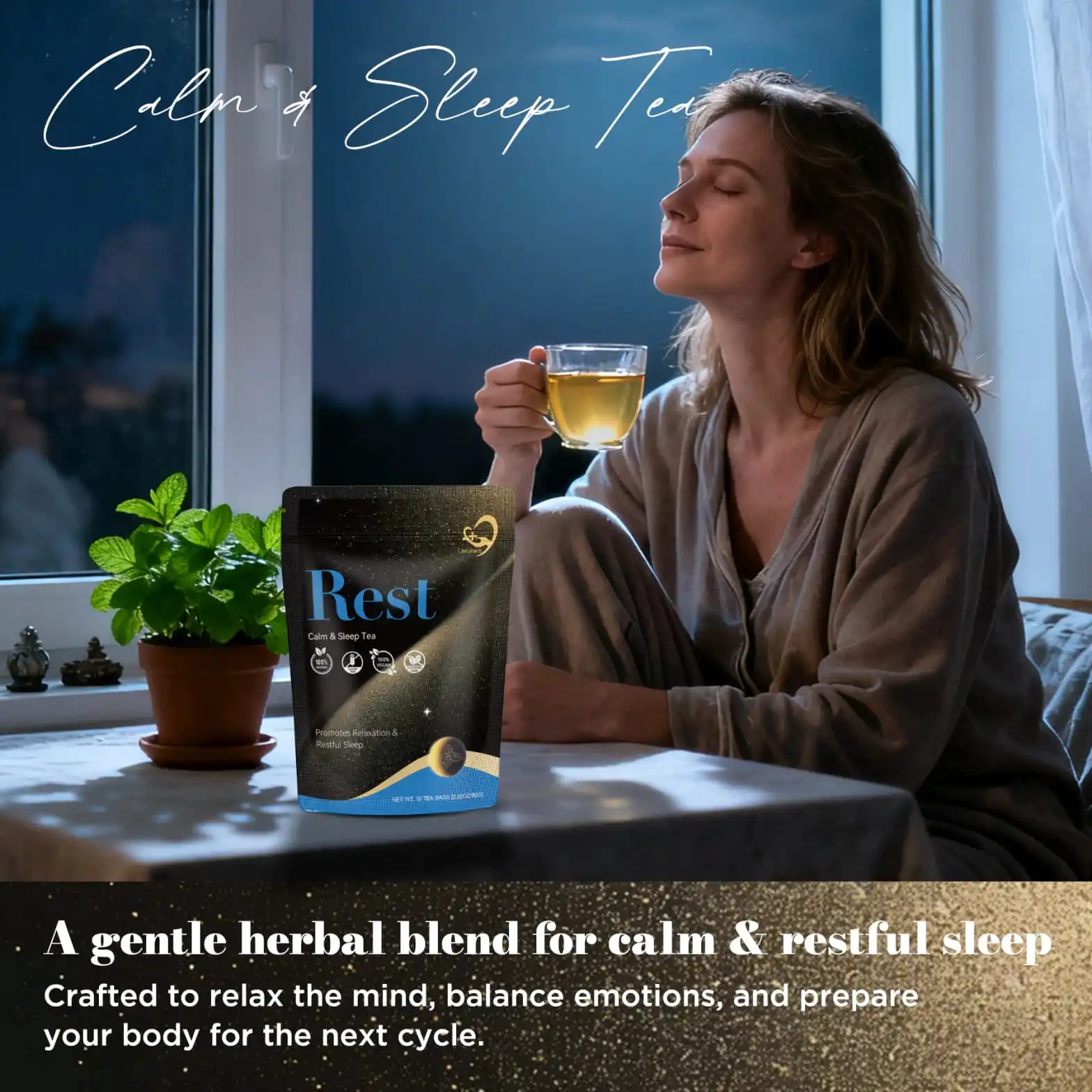
Rest Calm & Sleep Tea is a warm herbal beverage for a personal evening ritual, with a cycle-focused positioning. Brew the sachet according to the current product directions, give yourself enough time to drink it comfortably, and pair it with habits that make bedtime less stimulating, such as dimmer lighting, fewer notifications, or a consistent wind-down cue.
The value of that ritual is not that it overpowers insomnia. It is that it gives the evening a boundary. During the luteal phase, a person may want a routine that acknowledges changes in comfort without turning every restless night into a supplement experiment. Cinnamon, nettle leaf, raspberry fruit, ginger, spearmint, lemongrass, ashwagandha, and radix asparagi define the blend; they do not create a guarantee.
The product information supplied for this article describes 8 g sachets and ten sachets per box. Before publishing, confirm those specifications, the full label, allergen statements, and available quality documentation against the live product page. For cycle-related symptoms, readers can review the menstrual-cycle sleep literature and the Mayo Clinic PMS diagnosis and treatment overview.
Conclusion
A luteal phase tea and a sleep medicine can both appear in a bedtime search, but they do not perform the same job. Hiherbs Rest Calm & Sleep Tea is a cycle-focused herbal beverage intended to support a non-medical wind-down ritual. Melatonin and magnesium are supplements with their own evidence and interaction questions. OTC antihistamines are drugs with label warnings. Prescription sleep medicines belong within a clinician-guided plan for an identified problem.
Use tea as a ritual if the ritual suits you, and seek professional care when sleep trouble is persistent, severe, or affecting daytime function. Do not use the word “natural” as a safety shortcut, and do not use a product comparison as a diagnosis.
Frequently Asked Questions
1. Can I become dependent on a luteal phase tea like Rest Calm & Sleep Tea?
Rest Calm & Sleep Tea is presented as a food-style herbal beverage, not as a prescription hypnotic. That classification does not prove that long-term, frequent use is risk-free, and there are no long-term clinical studies showing that this specific blend is free from every possible problem. Use it only as directed and discuss concerns about increasing use or other sedating products with a healthcare professional.
2. When is the best time to drink a luteal phase tea?
A luteal phase tea is generally positioned for the second half of the menstrual cycle, after ovulation and before the next period. The length and timing vary, so a fixed “one to two weeks” rule will not fit everyone. Rest Tea can be brewed in the evening as part of a comfortable wind-down routine, following the current product directions.
3. Could this tea interact with my medication, or help with persistent insomnia?
Herbs can interact with medicines, and the risk depends on the full ingredient list, amount, preparation, medicine, and personal health history. Rest Tea contains multiple herbs, including ashwagandha, so people taking medication should ask a pharmacist or doctor before use. Persistent insomnia is not a problem to manage with an herbal beverage alone; a clinician can discuss possible contributors and evidence-based options.
Author
Hiherbs Editorial Team
This article was prepared by the Hiherbs editorial team from the supplied product information and linked public health references. It is educational content, not medical advice, and it has not been attributed to a physician or other credentialed medical professional.
References
- American College of Obstetricians and Gynecologists. Premenstrual Syndrome (PMS).
- U.S. Food and Drug Administration. Questions and Answers on Dietary Supplements.
- U.S. National Library of Medicine, DailyMed. Consumer drug labeling.
- Sateia, M. J., Buysse, D. J., Krystal, A. D., Neubauer, D. N., & Heald, J. L. (2017). Clinical Practice Guideline for the Pharmacologic Treatment of Chronic Insomnia in Adults. Journal of Clinical Sleep Medicine, 13(2), 307–349. Journal link.
- National Center for Complementary and Integrative Health. Melatonin: What You Need To Know.
- National Institutes of Health, Office of Dietary Supplements. Valerian Fact Sheet for Health Professionals.
- Baker, F. C., & Lee, K. A. (2018). Menstrual cycle effects on sleep. Sleep Medicine Clinics, 13(3), 283–294. Public medical literature link.
- Mayo Clinic. Premenstrual syndrome: Diagnosis and treatment.