Himalayan Sea Buckthorn Oil and Blood Thinners: What to Ask
HiherbsOfficial
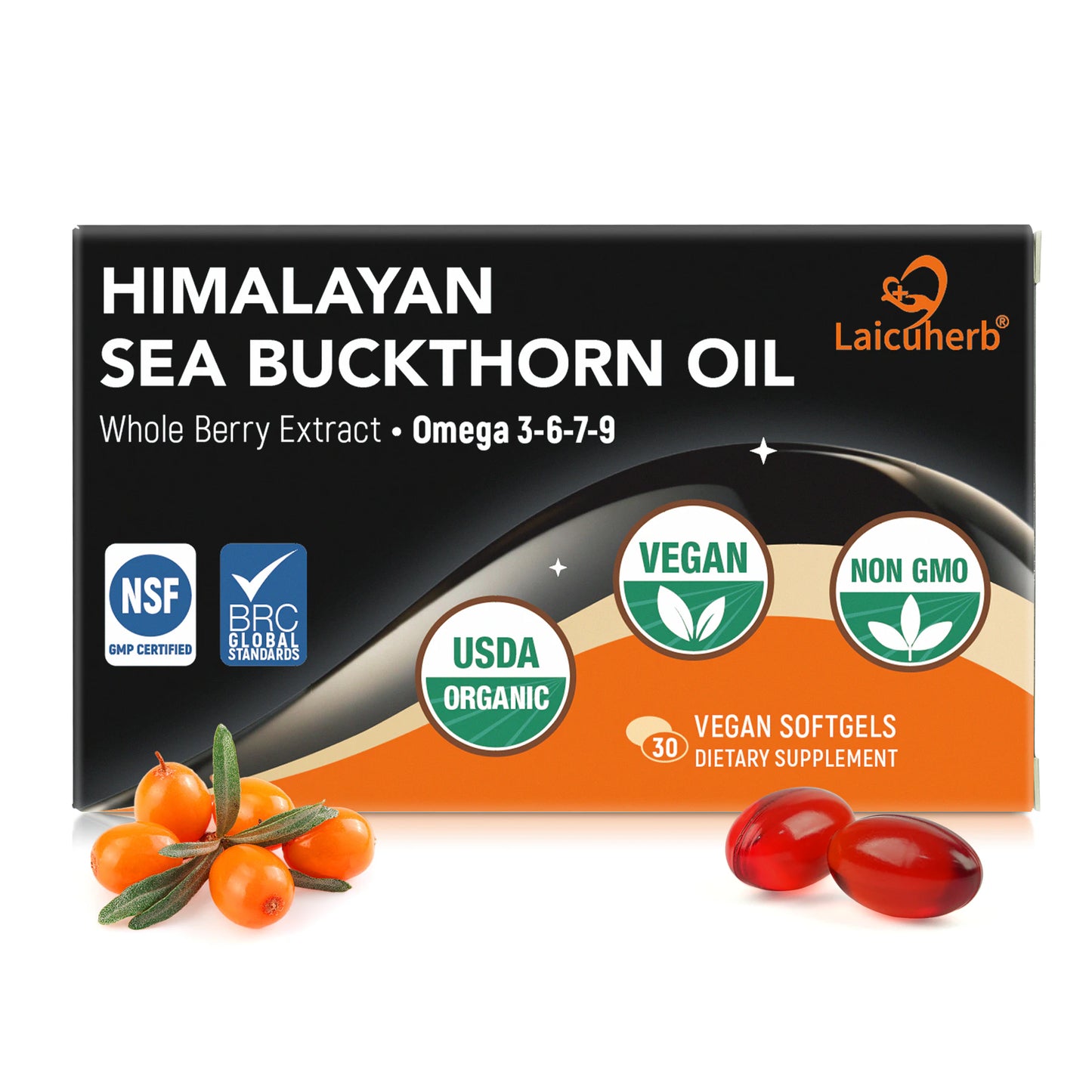
When you already manage a prescription that affects how your blood clots, adding anything new to your routine — even a plant-based oil — deserves a deliberate conversation with whoever wrote that prescription. Himalayan sea buckthorn oil attracts interest as a vegetarian alternative to fish oil. Hiherbs carries Laicuherb Himalayan Sea Buckthorn Oil, described as a whole-berry product combining seed and pulp material, with Omega-3, Omega-6, Omega-7, and Omega-9, wild-collected at high altitude and processed via low-temperature CO₂ extraction in NSF cGMP- and BRC-certified facilities.
Those sourcing and production details are worth knowing — but they don't answer the question a person taking warfarin, aspirin, or a direct oral anticoagulant actually needs to resolve. That answer lives with a pharmacist or prescribing clinician who can read the full label, review the dose, and weigh it against a specific medication and bleeding history. This article explains where the evidence begins and ends, without advising anyone to change a prescription.
Contents
Quick Answer: Get a Medication Review First
Before you open the first bottle:
Do not start Himalayan sea buckthorn oil — or any new supplement — alongside a blood thinner or antiplatelet medicine without speaking to your prescribing clinician or pharmacist first. Dedicated human evidence for this specific oil's effect on clinically important bleeding outcomes is limited. Evidence from fish-oil research cannot be transplanted wholesale onto a whole-berry sea buckthorn formula.
The right answer is not a universal yes or a universal no — it shifts based on which medicine you take, how it works, what it monitors, and your broader health picture. Warfarin users often have a narrow therapeutic window and regular INR checks. Aspirin and clopidogrel alter platelet activity through different mechanisms. Direct oral anticoagulants such as apixaban or rivaroxaban follow their own dosing rules with less routine lab monitoring. Kidney function, liver health, planned procedures, and a personal history of bruising or unusual bleeding all carry weight in that conversation.
The practical first step: bring the Supplement Facts panel, the serving size, and the complete ingredient list to a pharmacist or clinician before the first softgel.
Why "Food-Based" Doesn't Mean Neutral
Calling a supplement "plant-based" or "whole-berry" describes its origin, not its biological activity. Dietary oils contain active fatty acids and other compounds — that is precisely why people use them. Laicuherb Himalayan Sea Buckthorn Oil is positioned as a vegetarian omega-rich supplement for general wellness, with a whole-berry format that brings together both seed and pulp material. That is a composition and sourcing statement. It is not a cardiovascular, dermatological, mucosal, immune, or exercise-recovery claim.
The more important framing for anyone on a complex medication schedule is not whether the oil comes from a berry harvested at altitude. It is whether that oil's specific ingredients, dose, and preparation could interact with the prescriptions already in the picture.
Requesting a medication review is a precaution — not an assertion that Himalayan sea buckthorn oil is itself a blood thinner or that it will automatically conflict with every anticoagulant regimen.
What the Research Actually Shows
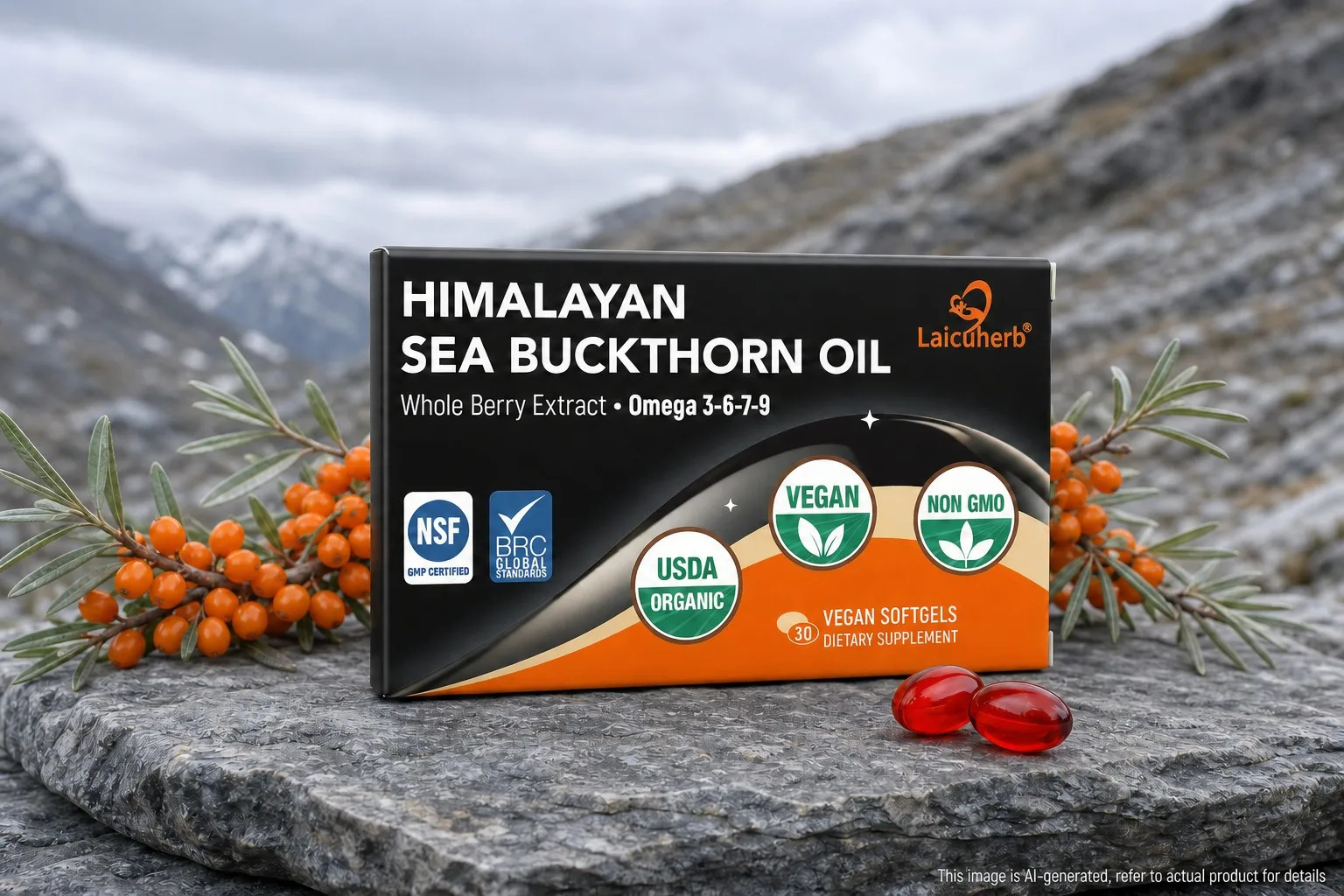
Researchers have examined sea buckthorn as a botanical source of multiple bioactive compounds, and broader reviews describe the plant's fatty-acid and flavonoid composition in useful detail [1]. What those reviews cannot do is function as a clinical interaction study. A plant review identifies what compounds are present; it does not measure whether a commercial softgel changes coagulation parameters in someone taking a prescribed anticoagulant.
Laboratory research on specific sea buckthorn flavonoids — including isorhamnetin and related derivatives — has explored potential antiplatelet and anticoagulant activity in cell or isolated-platelet models [2]. Laboratory findings are valuable as early signals, but they have a hard boundary: a cell-based experiment cannot tell you whether a commercially produced softgel containing whole sea buckthorn oil will alter bleeding risk in a person who takes clopidogrel or warfarin. The jump from a laboratory model to a living person on a prescription is not a small one.
Fish-oil evidence introduces a separate complication. The NIH Office of Dietary Supplements' guidance on omega-3 fatty acids addresses EPA and DHA — the long-chain fatty acids found in marine oils [3]. That body of research does not automatically transfer to a whole-berry land-plant formula whose omega-3 contribution comes from a different fatty-acid type, in a different ratio, alongside Omega-6, Omega-7, and Omega-9. Using fish-oil data as a proxy for sea buckthorn oil claims a similarity that has not been established.
The honest summary: there is a theoretical basis for asking the question when someone taking a clotting-affecting medicine considers adding a fatty-acid-rich supplement. There is not sufficient direct evidence to assign a defined interaction risk, a clinical bleeding probability, or a confirmed safe dose to this specific product.
What the Evidence Doesn't Settle
Not established by current evidence
- Clinically proven anticoagulant activity in people
- A predictable or universal bleeding outcome
- A safe combined dose with warfarin, aspirin, or DOAC
- Compatibility with every anticoagulant regimen
- Equivalence with fish-oil interaction data
What product documentation can confirm
- Ingredient identity and batch composition
- Manufacturing and quality standards
- Sourcing and extraction method details
- Certification scope (NSF cGMP, BRC, etc.)
- Serving size and declared nutrient content
Fish-oil data, when it exists, describes different formulations, patient populations, and dosing contexts. Even within that literature, variation in EPA and DHA content, dose, study duration, and background medication makes it hard to extract a single rule. Treating those findings as a straightforward guide to a sea buckthorn softgel's safety profile skips over meaningful differences.
Most importantly: if you currently take a prescribed anticoagulant or antiplatelet medicine, the right action is to bring the product label to your clinician — not to reduce, pause, or stop the prescription on the basis of anything in this article. The clinician who prescribed the medication holds the context needed to evaluate the specific question.
Who Should Be Especially Careful
The following circumstances make a pre-supplement medication review especially important. This is not a diagnostic checklist — it is a list of situations where the conversation with a qualified professional is non-optional.
Prescription medications
- Warfarin or other vitamin K antagonists
- Aspirin (any dose, any indication)
- Clopidogrel, ticagrelor, or prasugrel
- Direct oral anticoagulants (apixaban, rivaroxaban, dabigatran, edoxaban)
- Heparin or low-molecular-weight heparin
- Any narrow-therapeutic-window medicine
Health conditions & situations
- Diagnosed bleeding disorder
- Unexplained or frequent bruising
- History of gastrointestinal bleeding
- Abnormal clotting test results
- Significant liver or kidney disease
- Planned surgery or dental procedure
- Pregnancy or breastfeeding
Note on pregnancy and breastfeeding: Reliable safety data for concentrated or medicinal sea buckthorn oil use during pregnancy and lactation is limited. Consult an obstetric clinician, midwife, or pharmacist before starting any supplement at this stage. Supplements should complement — not replace — prenatal care, prescribed treatment, or individualized nutrition guidance.
Questions to Bring to Your Clinician
Arrive with the product label in hand — or a photo of the Supplement Facts panel, serving size, and full ingredient list. Then ask specifically:
- "Could this particular Himalayan sea buckthorn oil product interact with [the exact medicine you take]?" Name the medicine. Name the dose. Show the label.
- "Does starting this supplement mean I need additional INR, kidney-function, blood-pressure, or other monitoring?" The answer depends on your specific medication — let the clinician decide what applies.
- "What symptoms should prompt me to call you?" Ask about unusual bruising, nosebleeds that are hard to stop, blood in urine or stool, black stools, vomiting blood, heavy menstrual bleeding, severe headache, dizziness, or fainting.
- "Should I disclose this supplement before a scheduled surgery or dental procedure, and how far in advance?" The surgical or dental team needs the full label — not just a category name.
- "How does this compare with fish oil, given my prescription?" Use the comparison as a discussion anchor, not as an assumption that the two products behave identically.
Do not assume that spacing the supplement several hours away from a medication resolves a pharmacodynamic or metabolic interaction. Timing is only one dimension; the clinician needs the full picture.
Conclusion
Three things to carry forward
- No dedicated clinical study has established this product's interaction profile with blood thinners at every dose and diagnosis.
- Fish-oil evidence, laboratory platelet data, and plant-review findings each have their own scope — none substitutes for a review of the actual product against the actual prescription.
- Product quality documentation (NSF cGMP, BRC, USDA Organic, Non-GMO, Vegan) confirms manufacturing standards. It does not confirm individual compatibility with a blood-thinning regimen.
Laicuherb Himalayan Sea Buckthorn Oil is an omega-rich whole-berry supplement with a documented sourcing and certification story. The responsible path is to share that story — label, dose, serving format — with the pharmacist, prescribing clinician, dentist, or surgical team who knows your medication list before the bottle is opened.
Do not self-adjust a prescribed anticoagulant or antiplatelet medicine for any reason. Ask the questions that belong to your specific situation. "Natural" is an origin claim, not a compatibility guarantee.
FAQ
Hiherbs
Laicuherb Himalayan Sea Buckthorn Oil
Whole-berry vegan softgels · Omega-3, 6, 7 & 9 · Wild-collected high altitude · Low-temp CO₂ extraction · NSF cGMP, BRC, USDA Organic, Non-GMO, Vegan certified
View Product Page →For ingredients, sourcing details, or certification documentation:
hiherbs0129@gmail.com
This product is not intended to diagnose, treat, cure, or prevent any disease. Certification documents do not replace individualized medical advice about blood-thinning medications.
References
- Suryakumar, G., & Gupta, A. (2011). Medicinal and therapeutic potential of sea buckthorn (Hippophae rhamnoides L.). Journal of Ethnopharmacology, 138(2), 268–278.
- Antiplatelet and anticoagulant activity of isorhamnetin and its derivatives from sea buckthorn fruit. (2022). Molecules, 27(13), 4050. https://pmc.ncbi.nlm.nih.gov/articles/PMC9319006/
- National Institutes of Health, Office of Dietary Supplements. Omega-3 Fatty Acids: Fact Sheet for Health Professionals. https://ods.od.nih.gov/factsheets/Omega3FattyAcids-HealthProfessional/
Original article source reference: Laicuherb Editorial. Himalayan Sea Buckthorn Oil and Blood Thinners: What to Ask. Laicuherb.com.