Feminine Moisture Supplement: When Intimate Dryness Needs Medical Care
HiherbsOfficial
Intimate dryness is a real physical symptom with a range of possible causes — and a supplement is rarely the first question that needs answering. Before you open a product page, it's worth asking a more fundamental question: what is actually causing this, and does it need professional evaluation?
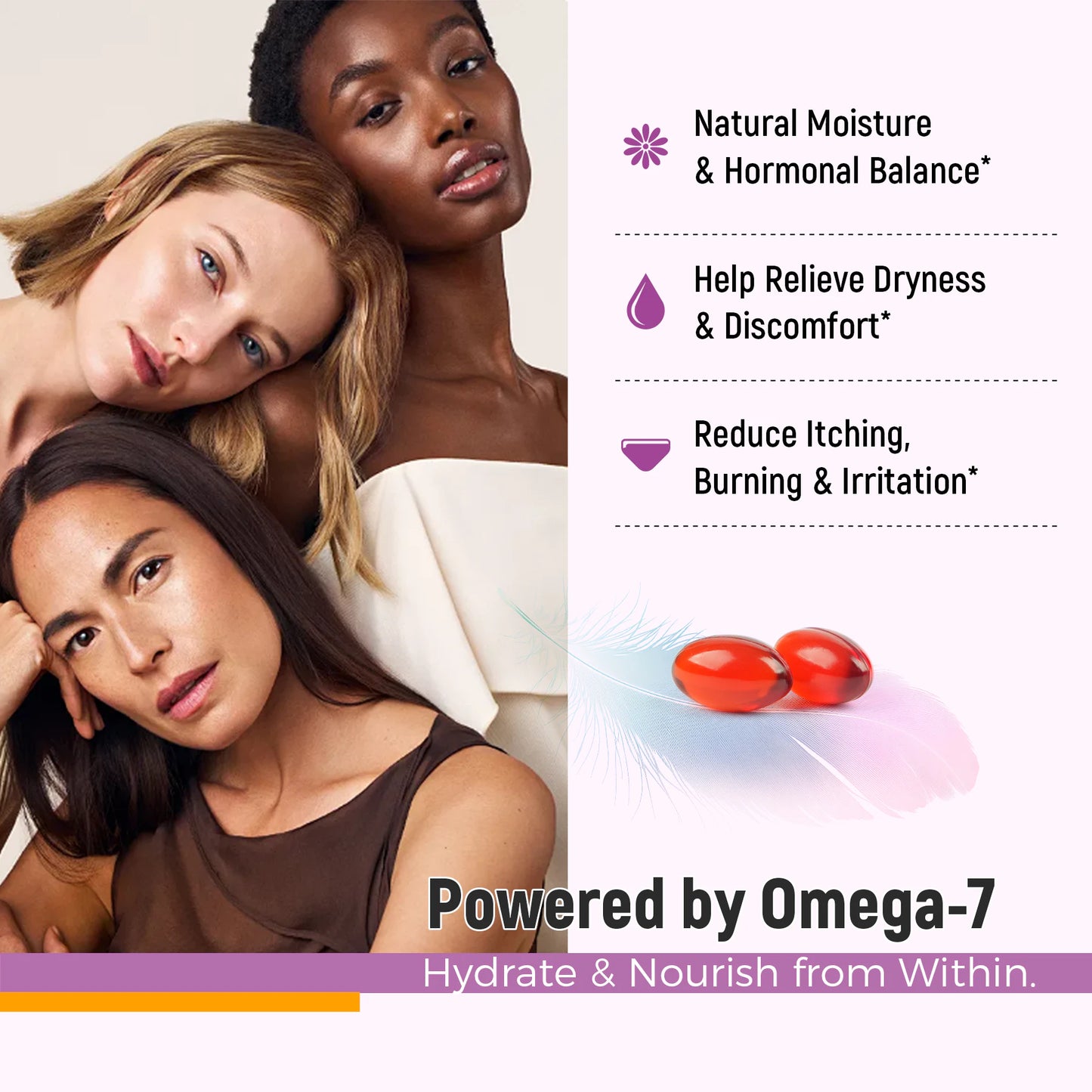
Laicuherb Feminine Moisture Support is described as a non-hormonal daily oral softgel made with whole sea-buckthorn berry extract, naturally occurring Omega-7 fatty acids, and stated vitamins — supplied with USDA Organic, GMP, Non-GMO, and BRC documentation. Those are manufacturing and sourcing details. They don't identify the source of your discomfort, rule out an infection, or replace a clinical assessment.
This guide walks through the medical picture first. If your symptoms are mild, already assessed, and don't raise red flags, the supplement section will still be there at the end.
Contents
- → Quick Answer: When to See a Clinician First
- → Life-Stage and Medication-Related Causes
- → Red Flags That Need Medical Attention
- → Why Self-Diagnosis Can Miss the Real Cause
- → Lubricants, Moisturizers, Hormones, and Oral Supplements
- → What the Supplement Cannot Replace
- → How to Prepare for a Clinician Visit
- → Conclusion
- → FAQ
Quick Answer: When to See a Clinician First
Seek professional evaluation if you have:
- Dryness that has persisted for several weeks without improvement
- Pain during sex, insertion, or daily movement
- Symptoms that keep returning after improving
- Bleeding after sex or after menopause
- Unusual, new, or foul-smelling discharge
- Visible sores, skin changes, or severe burning
- Fever, pelvic pain, or new urinary symptoms
Intimate dryness isn't a single condition — it's a symptom that can arise from genitourinary changes associated with menopause, breastfeeding-related low estrogen, medication side effects, contact irritation, infection, or a dermatological condition. The same sensation can have several different causes, and those causes call for different responses. An oral supplement is not a sorting tool.
A healthcare professional can review your life stage, medications, and symptom history, and decide whether an examination or further testing is appropriate. Supplement use can be revisited once the clinical picture is clearer.
Life-Stage and Medication-Related Causes
During and after menopause, declining estrogen levels can cause vaginal tissue to become thinner, less flexible, and less naturally lubricated — a cluster of changes clinicians may describe as genitourinary syndrome of menopause (GSM) [1][4]. Breastfeeding can produce a similar hormonal pattern and temporary dryness. These are recognised patterns, not universal rules — they are more useful as context for a clinical conversation than as a self-diagnosis.
Some medications are associated with dryness as a side effect — certain antihistamines, antidepressants, and other drugs can reduce natural lubrication in some people. If your dryness started after a medication change, that timing is worth mentioning to your prescribing clinician. Do not stop or adjust a prescription without speaking to a healthcare provider first.
Laicuherb Feminine Moisture Support is described as a non-hormonal oral supplement. It does not alter estrogen levels or diagnose why tissue feels dry. If you are postpartum, currently breastfeeding, managing a health condition, or taking prescription medication, bring that full picture to any clinical consultation before adding a new supplement.
Red Flags That Need Medical Attention

Certain symptoms should move a clinician appointment to the top of your list rather than a supplement to the top of your shopping cart. Contact a qualified healthcare professional — and don't wait — if you notice:
Genital / pelvic symptoms
- Bleeding after sex
- Bleeding after menopause
- Unexpected or unexplained bleeding
- Unusual, new, or foul-smelling discharge
- Visible sores or skin changes on the vulva
- Severe or worsening burning
- Deep or persistent pelvic pain
- Fever alongside pelvic symptoms
Urinary symptoms
- Pain or burning with urination
- Urinary urgency or much greater frequency
- Blood in the urine
- Repeated urinary tract infections
Seek urgent care for
- Severe pain with fever
- Heavy or uncontrolled bleeding
- Fainting or sudden weakness
- Rapidly worsening symptoms
These symptoms can appear across a range of conditions — infections, inflammatory skin disorders, urinary conditions, and others — that require a different clinical response. They are not proof of any particular diagnosis. They are reasons to contact a healthcare professional rather than managing the symptom independently with a supplement. Do not insert an oral softgel or apply it externally — it is designed to be swallowed per the product directions only.
Why Self-Diagnosis Can Miss the Real Cause
Dryness, itching, burning, and discomfort overlap across a wide range of conditions. Yeast infection, bacterial vaginosis, sexually transmitted infections, contact irritation from products, lichen sclerosus or other vulvar skin diseases, and low-estrogen tissue changes can each produce similar surface sensations. Partial relief from a lubricant doesn't confirm the underlying cause has resolved — it may simply be masking the symptom.
A clinician can decide whether an examination, pH swab, urine test, culture, or other assessment is appropriate based on the specific symptom picture. Not every presentation requires every test. The point is that the right evaluation depends on what an expert observes and asks — not on how the symptom feels to you in isolation.
An oral supplement such as Feminine Moisture Support cannot identify or eliminate an organism, treat a skin disorder, or diagnose a urinary problem. For product questions — ingredients, certifications, sourcing — contact hiherbs0129@gmail.com. Medical questions belong with your healthcare provider.
Lubricants, Moisturizers, Hormones, and Oral Supplements
Lubricants
Applied during sexual activity to reduce friction. Fast-acting; affects surface comfort in the moment only.
Vaginal moisturizers
Applied regularly (not just during sex) to support surface hydration and comfort between episodes.
Local hormonal treatments
Prescribed vaginal estrogen or related products address low-estrogen tissue changes through direct local application. Require a clinician's guidance.
Oral supplements (this product)
Daily softgel taken by mouth. Not fast-acting; not a lubricant or vaginal moisturizer; not for topical use. Works through systemic absorption if at all.
These categories serve different purposes and should not be treated as interchangeable. Some people use a lubricant for sex and a topical moisturizer for ongoing comfort. Others need local hormonal treatment or a specific therapy for a diagnosed condition. The right combination depends on the identified cause, symptom location, personal preferences, and what a clinician has assessed and recommended [1].
What the Supplement Cannot Replace
Feminine Moisture Support is described as a non-hormonal wellness supplement. That description should be taken precisely — it is not a claim of broad therapeutic action. The product cannot substitute for antibiotics, antifungals, antiviral treatment, prescribed local estrogen, evaluation of a dermatological condition, or investigation of unexplained bleeding.
Sea-buckthorn research exists but has specific boundaries. A 2010 study by Larmo et al. examined oral sea-buckthorn oil in relation to dry-eye symptoms [3]. A separate 2014 randomized, double-blind, placebo-controlled study by the same research group examined sea-buckthorn oil in postmenopausal women with vaginal atrophy and found improvements in vaginal epithelium integrity in the treatment group [7]. That is more directly relevant research — and it is still one study in a specific population, with a specific preparation, at a specific dose. It does not prove that this finished softgel produces the same outcome for every person, or at every stage of life.
If a clinician identifies an infection, skin condition, urinary problem, or another treatable cause, the supplement should not delay or replace that treatment. Laicuherb positions Feminine Moisture Support as an optional daily wellness addition — within that scope, it may fit a care routine. Outside that scope, medical care takes priority.
How to Prepare for a Clinician Visit
A focused conversation at the appointment is more useful than a general complaint about dryness. Before you go, note the following:
- When did it start — and does it relate to a life-stage change, birth, breastfeeding, or a medication switch?
- What makes it better or worse — cycle phase, sexual activity, specific products, stress?
- Other symptoms — pain, itching, burning, discharge, bleeding, urinary changes, fever
- What you've already tried — lubricants, moisturizers, supplements, OTC treatments
- Full medication and supplement list, including any oral softgel like Feminine Moisture Support
- Postpartum or breastfeeding details — time since delivery, whether your cycle has returned
- Menopause status — if you've had twelve or more months without a period, note any bleeding clearly
Specific language helps. "It burns when I urinate" or "insertion is painful even without sex" gives a clinician more to work with than "I feel dry." A product page can confirm the supplement's ingredient panel and certification documents. The medical interpretation belongs with the clinician.
Conclusion
Three things to take with you
- Intimate dryness has multiple possible causes. Menopause, breastfeeding, medication effects, infection, skin disease, and urinary conditions can all overlap. A supplement doesn't sort them.
- Red-flag symptoms require professional evaluation — not a product. Bleeding, unusual discharge, fever, pelvic pain, and urinary changes belong in a clinical consultation before any supplement decision.
- Feminine Moisture Support has a defined role. It is a non-hormonal oral wellness supplement — not a lubricant, local moisturizer, hormone treatment, or infection therapy. Its potential place is after evaluation, not instead of it.
Use professional evaluation to identify the cause. If your clinician agrees that a non-hormonal supplement fits your personal care plan, the product information is available on the product page for review.
FAQ
Hiherbs
Laicuherb Feminine Moisture Support
Non-hormonal oral softgel · Whole sea-buckthorn extract · Omega-7 · USDA Organic · GMP · Non-GMO · BRC
View Product Page →Questions about ingredients, certifications, or sourcing:
hiherbs0129@gmail.com
This product is not intended to diagnose, treat, cure, or prevent disease. Certification documents do not replace individualized medical advice. If you are pregnant, breastfeeding, or managing a health condition, speak with a clinician before use.
References
- Edwards, D., & Panay, N. (2016). Treating vulvovaginal atrophy/genitourinary syndrome of menopause: How important is vaginal lubricant and moisturizer? Climacteric, 19(4), 344–349.
- Kingsberg, S. A., Wysocki, S., Magnus, L., & Krychman, M. L. (2013). Vulvar and vaginal atrophy in postmenopausal women: Findings from the REVIVE survey. The Journal of Sexual Medicine, 10(7), 1790–1799.
- Larmo, P. S., Järvinen, R. L., Setälä, N. L., et al. (2010). Oral sea buckthorn oil attenuates tear film evaporation and symptoms of dry eye. The Journal of Nutrition, 140(8), 1462–1469.
- Palacios, S. (2009). Managing urogenital atrophy. Maturitas, 63(4), 315–318.
- Goldstein, A. T., & Burrows, L. J. (2008). Vulvar dermatoses. Clinical Obstetrics and Gynecology, 51(2), 351–366.
- The 2022 Hormone Therapy Position Statement Advisory Panel. (2022). The 2022 hormone therapy position statement of The North American Menopause Society. Menopause, 29(7), 767–794.
- Larmo, P. S., Kyllönen, H., Järvinen, R. L., et al. (2014). Effects of sea buckthorn oil intake on vaginal atrophy in postmenopausal women: A randomized, double-blind, placebo-controlled study. Maturitas, 79(3), 316–321.
Original article source reference: Laicuherb Editorial. Feminine Moisture Supplement: When Intimate Dryness Needs Medical Care. Laicuherb.com.