
Deciphering Sea Buckthorn: A Detailed Contrast Guide Between Seed and Berry Pulp Oils
HiherbsOfficial
Celebrated as a nutrient-dense superfruit, sea buckthorn yields natural oils that are highly esteemed in dermatological care, oral supplements, and wellness therapies. However, consumer products often feature two distinct extractions: Sea Buckthorn Seed Oil and Sea Buckthorn Berry (Pulp) Oil. Although sourced from the same botanical plant, these two variants possess highly distinct fatty acid structures, active compound profiles, and primary therapeutic functions. This comparative review explores the scientific differences between these oils, helping you identify the optimal extract for your physical wellness and skin health.
Explorer Directory
- 01 Fatty Acid and Phytochemical Comparison (Seed vs. Pulp)
- 02 Topical Use: Skin, Hair Benefits, and Formulation Guidance
- 03 Oral Use and Culinary Considerations: Safety, Taste, and Dosage
- 04 Extraction Methods, Stability, and Shelf Life
- 05 How to Choose: Buying, Sourcing, and Price
- 06 The Power of Synergetic Whole Berry Extraction
- 07 Recommendation: Laicuherb Whole Berry Sea Buckthorn Oil
- 08 Frequently Asked Questions
Fatty Acid and Phytochemical Comparison (Seed vs. Pulp)
To understand the biochemical differences between these two therapeutic oils, we must analyze their distinct lipid fingerprints.
Sea Buckthorn Seed Oil is characterized primarily by its high concentration of essential polyunsaturated fatty acids. This extract typically contains between 30% and 40% Linoleic Acid (Omega-6) alongside 25% to 35% alpha-Linolenic Acid (Omega-3). Having this near 1:1 balance is remarkably rare in the plant kingdom and plays a vital role in maintaining the structural integrity of cellular membranes. Its total unsaturated fatty acid content often exceeds 85%.
Conversely, Sea Buckthorn Pulp Oil is renowned for its exceptional levels of Palmitoleic Acid (Omega-7), with active concentrations usually spanning between 30% and 45%. Omega-7 is a key building block for human skin tissue and mucosal linings, yet it is rarely found in standard modern diets. Additionally, the berry pulp oil is rich in Palmitic Acid and contains dense concentrations of carotenoids, which give the extract its deep, fiery orange-red color.
| Component | Sea Buckthorn Seed Oil | Sea Buckthorn Pulp Oil | Evidence Strength |
|---|---|---|---|
| Omega-3 (ALA) | 25-35% | Trace (<1%) | High (GC Analysis) |
| Omega-6 (LA) | 30-40% | 5-10% | High (GC Analysis) |
| Omega-7 | <1% | 30-45% | High (Clinical Relevance) |
| Carotenoids | Lower (Pale Yellow) | Very High (Deep Orange/Red) | Medium (Antioxidant Assay) |
| Vitamin E | High (Tocopherols) | Medium (Tocotrienols) | Medium (Stability Testing) |
These structural variations determine their distinct clinical roles: seed oil acts as an essential builder for systemic cellular health, whereas pulp oil serves as an active agent for tissue recovery and reducing inflammation.
Topical Use: Skin, Hair Benefits, and Formulation Guidance
For direct application in skincare and haircare, the optimal choice depends entirely on your specific biological concerns and goals.
Sea Buckthorn Seed Oil (Barrier Repair & Oil Control)
Abundant in Linoleic Acid (Omega-6), this is the preferred option for balancing oily and acne-prone skin. Research indicates that acne-prone individuals often have lower concentrations of linoleic acid in their sebum; supplementing with seed oil helps regulate natural sebum production, soothe systemic irritation, and restore a compromised skin barrier.
- Recommended Concentration: Blend at 5% to 10% in face oils or serums, or use directly as a carrier oil (always after completing a patch test).
- Compatibility: Pairs exceptionally well with Retinol (Vitamin A) to help prevent dryness and skin flaking.
Sea Buckthorn Pulp Oil (Regeneration & Anti-Aging)
The potent tissue-healing properties of Omega-7 make pulp oil the definitive choice for treating mature skin, severe dryness, and promoting scar recovery. It supports collagen synthesis and accelerates the renewal of delicate epithelial tissues.
- A Word of Caution: Due to its highly concentrated carotenoid pigment, applying undiluted pulp oil can temporarily tint the skin yellow or orange.
- Recommended Concentration: Dilute to 1% to 3% in topical formulas to enjoy the therapeutic benefits without skin staining.
- Compatibility: Best blended with Hyaluronic Acid or Squalane to lock in hydration and enhance natural radiance.
Patch Test Protocol: Apply a tiny droplet of diluted oil to your inner forearm or behind the ear, waiting 24 hours to ensure no adverse reaction.
Oral Use and Culinary Considerations: Safety, Taste, and Dosage
When used as a dietary supplement, the internal mechanisms and safety protocols of these oils are equally vital to master.
The Internal Logic
- Seed Oil: Taken primarily to optimize systemic Omega-3 and Omega-6 balances, helping reduce cellular inflammation while supporting heart and brain functions.
- Pulp Oil: Primarily used to soothe mucosal dryness (such as Dry Eye Syndrome or gastric lining irritation) and support steady metabolic processes.
Dosage and Safety Parameters
- Common Specifications: Most premium commercial softgels are formulated at 500mg per pill.
- Recommended Dosage: 1,000mg to 2,000mg daily is the standard clinical range supported by modern research.
- Safety Warning: Sea buckthorn oil exhibits mild natural anticoagulant properties. Individuals taking blood thinners (like Warfarin), those scheduled for surgery, or pregnant women must always consult a licensed doctor prior to use.
Sensory Experience: Seed oil offers a mild, nutty flavor that is easy to ingest directly. Pulp oil delivers a robust, tangy berry taste coupled with a distinct, musky aroma. Because of their highly unsaturated structures, neither oil should ever be exposed to high-heat cooking. They are best consumed raw, drizzled over salads, or blended into morning smoothies to protect their fragile active compounds.
Extraction Methods, Stability, and Shelf Life
The chosen extraction technology directly determines the final purity, bio-activity, and overall therapeutic value of the sea buckthorn oil.
Primary Extraction Methodologies
- Supercritical CO2 Extraction (The Gold Standard): This is the premier method. It uses low-temperature processing and high pressure to extract the pure oil without leaving chemical solvent residues, preserving fragile vitamins and delicate Omega fatty acids.
- Cold Pressed: A traditional mechanical extraction suitable for seed oil, though it typically produces lower yields and can leave the final oil more vulnerable to rapid oxidation.
- Solvent Extraction: Often cheaper to implement, but can leave behind microscopic traces of industrial solvents such as hexane. Avoid these for therapeutic applications.
Stability and Storage Indicators
- Peroxide Value (PV): Should strictly remain below 10 meq/kg. A sharp, rancid smell is a reliable sign the oil has oxidized.
- Acid Value: Should remain consistently low to guarantee absolute freshness.
Sensory Judgment: Seed oil is clear, pale to golden yellow. Pulp oil is thick and vibrant orange-red. Both oils are highly sensitive to light, heat, and oxygen. Store them in dark glass bottles, ideally in a refrigerator or a cool place below 20 degrees Celsius.
How to Choose: Buying, Sourcing, and Price
In the global and US markets, choosing a reputable, verified supplier is key to ensuring you are not purchasing cheap filler oils.
The Smart Buyer's Checklist
- Verify the Label: Look for Supercritical CO2 Extracted and USDA Organic certifications directly on the packaging.
- Third-Party Testing: Reputable brands should readily provide a Certificate of Analysis (COA) detailing the fatty acid profile and peroxide value.
- Market Pricing Standards: Seed Oil averages around 15 to 25 dollars per 30ml; Pulp Oil is often slightly more expensive due to Omega-7 demand, averaging 20 to 35 dollars per 30ml.
Sourcing and Sustainability: The finest sea buckthorn is wild-harvested in the high-altitude Himalayan regions, Siberia, or Northern Europe. Wild-harvested berries naturally develop higher concentrations of secondary metabolites, but ensure the brand follows sustainable harvesting practices to protect local ecosystems.
The Power of Synergetic Whole Berry Extraction
While seed oil and pulp oil each offer unique individual benefits, nature designed them to work together in complete harmony. Choosing just one often means missing out on half of the plant's true healing potential.
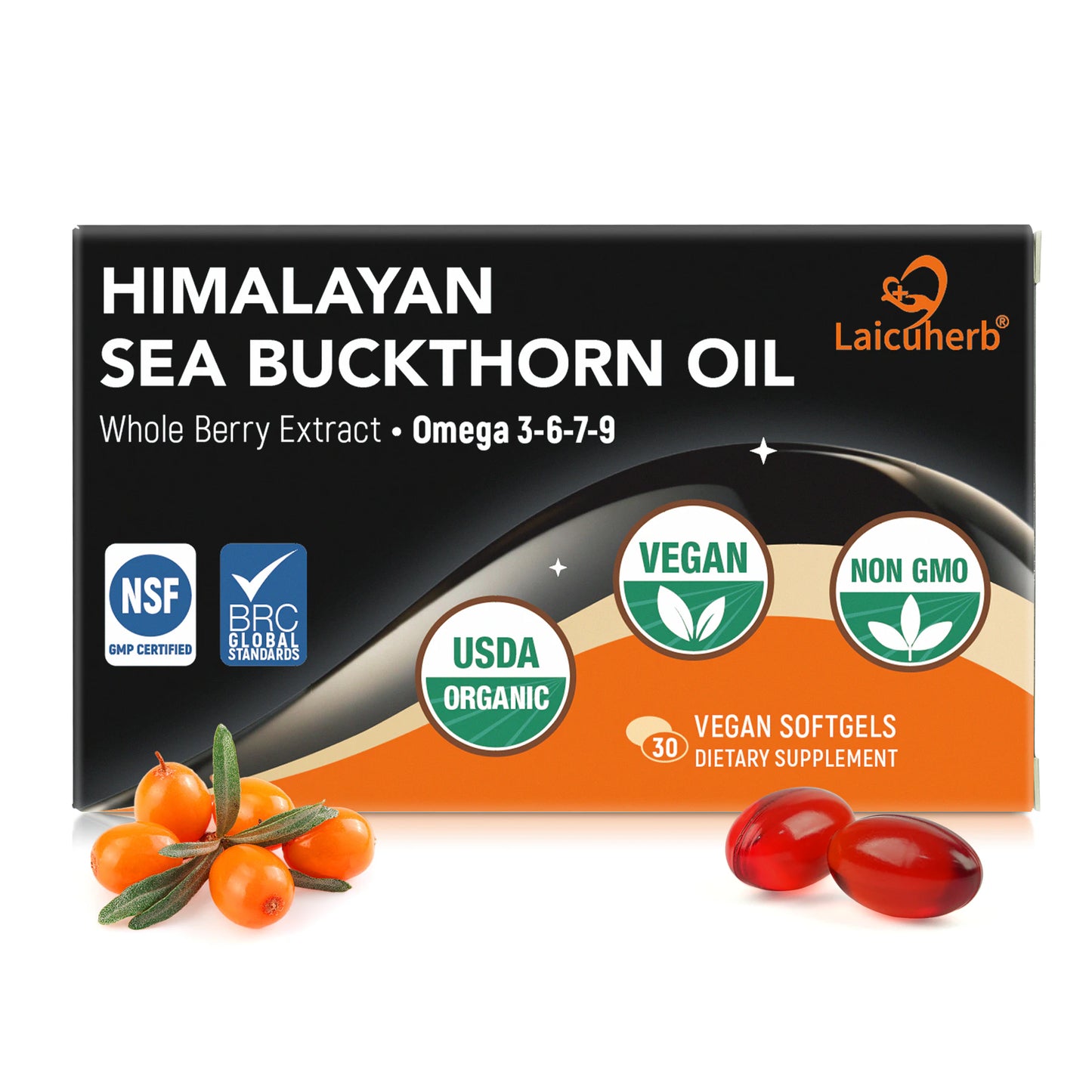
When you combine the barrier-strengthening Omega-3 and Omega-6 from the seeds with the mucosal-repairing Omega-7 and antioxidant-rich carotenoids from the pulp, you create a powerful synergetic effect. This Whole Berry approach provides a comprehensive Omega spectrum (3, 6, 7, and 9) that moisturizes the body from the inside out, protects the cardiovascular system, and promotes systemic anti-inflammation. If you are looking for the ultimate sea buckthorn experience, you should not have to choose between the seed and the fruit.
Recommendation: Laicuherb Whole Berry Sea Buckthorn Oil
Frequently Asked Questions
Q: What are the key compositional differences between sea buckthorn seed oil and pulp (berry) oil?
A: Sea buckthorn seed oil is uniquely abundant in crucial Omega-3 and Omega-6 essential fatty acids, typically balancing them in a highly rare, near 1:1 ratio. Conversely, berry pulp oil is defined by its incredibly high concentration of rare Omega-7 (Palmitoleic Acid) and contains a vastly greater payload of antioxidant carotenoids, which yields its characteristic fiery orange-red pigmentation.
Q: Which oil is better for skin care: sea buckthorn seed oil or pulp oil?
A: The ideal selection depends on your individual skin type. Highly nourishing seed oil is optimal for oily, blemish-prone, or sensitive skin due to its barrier-supportive linoleic acid content. On the other hand, rich pulp oil is far superior for hydrating mature, exceptionally dry, or compromised skin due to the deep cellular repair benefits of Omega-7.
Q: Can I take sea buckthorn oil orally, and which type is more suitable for internal use?
A: Yes, both variants are entirely safe and highly beneficial for oral consumption. Sourced seed oil is traditionally used to balance systemic polyunsaturated fatty acids and lower general inflammatory markers. Pulp oil (or high-end whole-berry extractions) is specifically effective for moisturizing and restoring delicate mucosal tissue linings, making it highly useful for soothing dry eyes or gastric lining irritation.
Q: How should I store sea buckthorn oils and what is their typical shelf life?
A: Both extractions should always be kept in protective dark glass bottles and stored in a cold, dark environment; keeping them refrigerated is highly recommended to prevent premature oxidation and maintain structural potency. When preserved correctly, their stable active shelf life generally spans between 12 and 18 months.
Q: What are the common side effects, allergy risks, or medication interactions to watch for?
A: Natural sea buckthorn oil is exceptionally safe for most people, but it does carry mild anticoagulant properties that can slow blood clotting. Always consult your primary care doctor if you take prescription blood thinners (like Warfarin), are preparing for an upcoming surgery, or are currently pregnant. For topical application, we recommend performing a standard patch test to rule out rare individual sensitivities.
Q: How do I choose between seed and pulp oil based on price, sourcing, and product testing?
A: Always look for reputable brands featuring certified USDA Organic and low-temperature Supercritical CO2 extraction seals directly on the label. High-quality suppliers should readily provide a third-party Certificate of Analysis (COA) verifying clean fatty acid levels and low peroxide indicators. Pure seed oils are generally slightly more accessible, while wild-harvested Himalayan berries represent the gold-standard premium tier for molecular density and efficacy.


