Ashwagandha Tea vs Ashwagandha Extracts: Why a Bedtime Cup Is Not the Study Dose
HiherbsOfficial
Many readers arrive at this comparison after seeing that ashwagandha improved sleep in a study, then finding an ashwagandha tea in a shop or subscription box. The instinct is understandable: perhaps the same herb is simply wearing different packaging. But the important difference is not the package. It is the measurement.
The frequently cited insomnia trial gave participants a measured capsule of a defined root extract: 300 mg twice daily for 10 weeks. Researchers then tracked sleep onset, sleep efficiency, and questionnaire scores. A tea box usually gives the weight of dried herbs inside an entire bag and may not state how much of that weight is ashwagandha, what plant part was used, or how much withanolide material is present. Those numbers do not automatically connect.
That places the bedtime cup in a narrower but still reasonable role: a warm, generally caffeine-free herbal drink and a repeatable evening ritual. It is not the intervention that produced the extract-study result. Keeping the cup and the trial in separate columns matters because ashwagandha carries a real safety list rather than an empty one.
In this article
Why grams and milligrams cannot be merged →
What tea drinkers are usually looking for →
What sleep and stress studies actually test →
What an ashwagandha tea label can tell you →
When insomnia needs medical care →
Quick Answer: A Study Dose Is Measured in Milligrams, a Tea Bag in Grams
An extract trial reports milligrams of a preparation whose composition was fixed before the first participant arrived. A tea reports grams of dried plant material per bag, and that figure covers everything in the bag at once. Unless a label states the milligrams of ashwagandha per serving and the strength of the material used, the two products cannot sit on the same scale. A longer steep does not create the missing conversion.
What an extract trial fixes
The preparation, plant part, measured amount, schedule, and study duration. Langade 2019 used a 300 mg root-extract capsule twice daily for 10 weeks.
What a tea label usually fixes
The total weight of the dried blend in one bag. Ashwagandha may be one ingredient among several, without a stated milligram amount or withanolide concentration.
The number on the pack describes the whole bag
Whether a tea box says 2 g or 8 g, that weight refers to the full contents of one bag. Ashwagandha may be one name among several. Its position in the ingredient list can show how the blend is presented, but it does not tell you how many milligrams of ashwagandha reach the cup. Pack weight is useful for choosing a tea. It is not enough for comparing the tea with a clinical extract.
Preparation changes the comparison
NCCIH describes ashwagandha (Withania somnifera) as an evergreen shrub containing compounds called withanolides. Supplements may contain root, leaf, or combined root-and-leaf extracts. The well-cited insomnia trial used a root-only extract standardized to more than five percent withanolides, a declared composition that a brew-from-dried-herb product generally does not carry. Hot water also extracts a different and unmeasured profile from a plant than a manufactured extract. For a particular commercial tea bag, the amount delivered by a normal home brew is simply not established.
What Ashwagandha Tea Searchers Usually Want
A gentler end to a crowded day
People looking for this format are often choosing a warm drink without caffeine, a small signal that work is over, and a habit that feels easier to repeat than swallowing a capsule. Those are legitimate reasons to prefer tea. They do not depend on matching a research dose.
The honest answer to “Will it work like the research?”
The comparison cannot be completed without a measured preparation. A study tests one product, one amount, one duration, and one participant group. “Ashwagandha” names the plant, not a universal dose.
NCCIH summarizes the human literature as many trials with small samples using a variety of preparations. A 2021 systematic review and meta-analysis found more encouraging sleep results clustered around approximately 600 mg per day of extract for eight weeks or longer. That is a description of the studied extract range, not a suggestion to take that amount and not a conversion for tea.
What Sleep and Stress Studies Actually Test

Dried ashwagandha roots and an unlabeled herbal cup.
Researchers set a dose and follow a schedule
Langade and colleagues randomized 60 adults aged 18 to 60 who met diagnostic criteria for insomnia. Forty received a 300 mg capsule of ashwagandha root extract twice daily; the rest received an identical starch placebo. The trial lasted 10 weeks. Sleep was assessed with wrist actigraphy, a standard sleep-quality questionnaire, and an anxiety scale. At the end, the extract group had shorter sleep-onset latency, higher sleep efficiency, and better reported sleep quality than the placebo group.
Two details should travel with that result. The placebo group also improved in sleep-onset time over the study period, and the authors called for larger studies. A positive signal is not the same as proof that every tea carrying the plant name has the same effect.
Even promising findings have boundaries
The trial excluded people taking regular medication, people with significant endocrine, liver, kidney, cardiac, or respiratory illness, people with other sleep disorders such as sleep apnea, and shift workers. That makes the study cleaner and also limits how far the result travels. NCCIH’s wider reading is that some ashwagandha preparations may help insomnia and stress, while evidence for anxiety remains unclear and longer-term safety cannot yet be concluded.
What an Ashwagandha Tea Label Can and Cannot Tell You
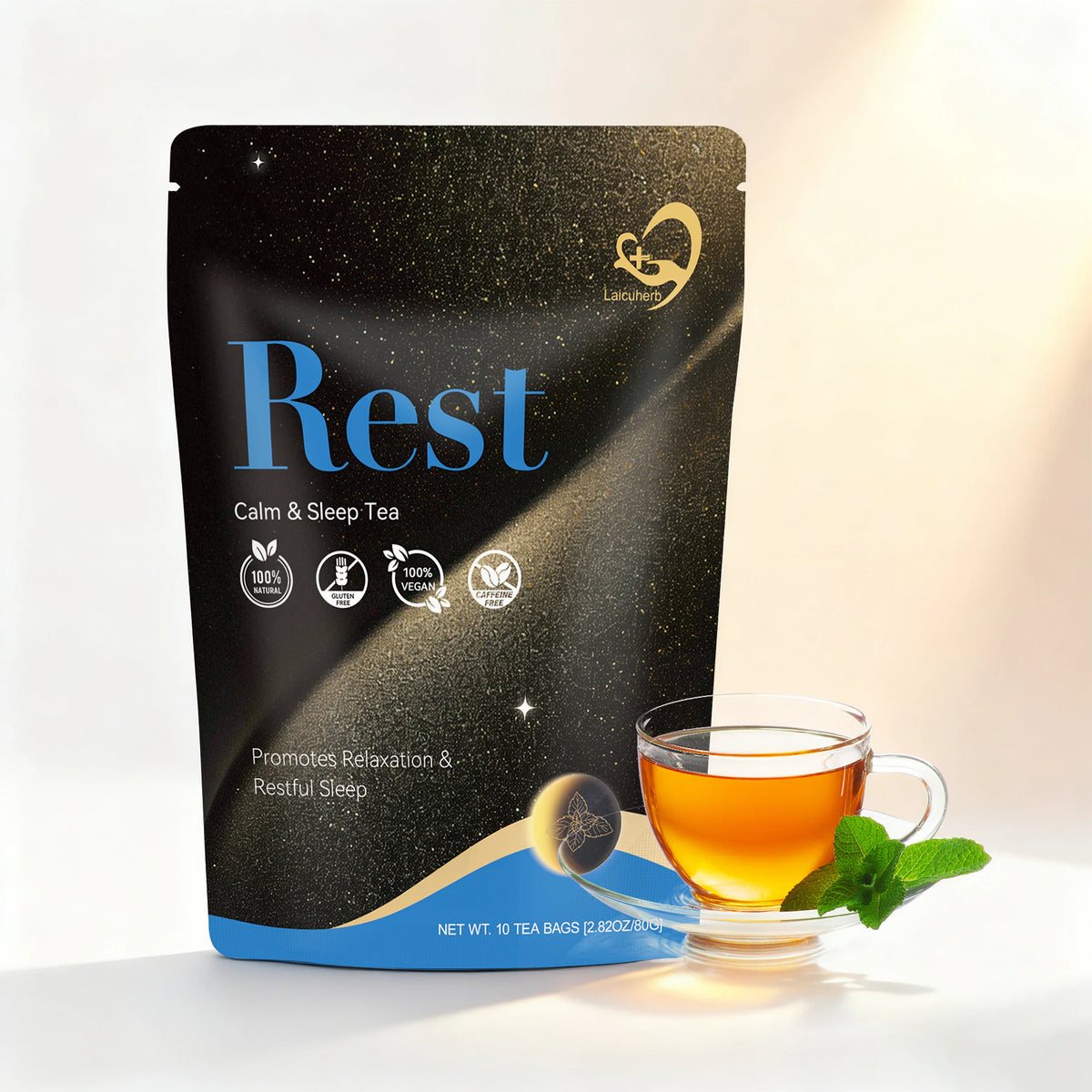
Most ashwagandha teas are not single-herb products. They may combine root with cinnamon, ginger, mint, lemongrass, or other ingredients. That makes the cup a flavor composition with ashwagandha as one voice rather than a measured delivery system for the herb. A single-ingredient tea and a multi-herb blend are different purchases even when both use the same word in the name.
Four label questions
- How many milligrams of ashwagandha are in one bag?
- Is the material root, leaf, or a combination?
- Does the label state a withanolide concentration, or only list dried herb?
- Are batch-testing documents available for the product you would receive?
The fourth question matters because oral herbal products marketed as dietary supplements are not approved by the FDA before sale. Manufacturers and distributors remain responsible for safety and labeling. If a product answers none of these questions but prices itself around a research headline, the headline is doing work the label cannot support.
Safety Questions: “Herbal” Does Not Mean Suitable for Everyone
NCCIH states that ashwagandha may be safe for some people in the short term, up to three months, but there is not enough information to judge longer-term safety. Reported effects can include drowsiness, stomach upset, diarrhea, and vomiting. Rare cases have linked ashwagandha supplements to liver injury.
Check before use
Pregnancy, breastfeeding, upcoming surgery, autoimmune disorders, thyroid disorders, or hormone-sensitive prostate cancer are reasons to seek professional advice rather than self-starting the herb.
Review the full list
Potential interactions include medicines for diabetes or high blood pressure, immunosuppressants, sedatives, anticonvulsants, and thyroid hormone. A multi-herb tea adds more names to check.
Drowsiness also deserves attention when the product is framed as a bedtime drink, because sedatives appear on the interaction list. Drinking extra cups to approach a study amount is not a safe conversion: the herb quantity is usually unstated, the amount moving into the water is not measured for that product, and additional cups increase every other ingredient in the blend too. Follow the packet directions; do not concentrate an unquantified dose by volume.
When Insomnia Needs Medical Care
Notice when a rough night becomes a pattern
NHLBI describes chronic insomnia as difficulty falling asleep or staying asleep at least three nights per week for more than three months, with daytime effects and without another condition fully explaining it. Persistent or worsening sleep problems deserve clinical attention rather than another shelf purchase. A simple log of bedtimes, awakenings, and daytime function can make that appointment more useful.
Give the cup a modest job
A nightly herbal cup can sit inside a routine: a consistent schedule, a calmer transition, and a repeatable signal that the day is closing. That is different from treating chronic insomnia. Behavioral approaches have the strongest role in long-term insomnia care, so a pleasant cup should support a routine rather than replace assessment or treatment.
Conclusion
Ashwagandha research is worth reading, but its findings belong to the extracts, doses, durations, and participant groups actually tested. The grams printed on a tea bag describe how much dried blend you are brewing, not a study amount. Without a stated milligram figure for the ashwagandha inside, the comparison cannot be completed. Choose tea for the reasons tea can be good for: warmth, flavor, and a repeatable evening ritual. Keep extract headlines attached to the preparations that earned them, and take the safety list seriously whenever medication, pregnancy, thyroid or autoimmune conditions, surgery, or persistent insomnia are part of the picture.
FAQ
1. Is there a measured dose of ashwagandha in ashwagandha tea?
Usually not. Tea labels give the weight of the bag or blend and rarely state milligrams of ashwagandha per serving or a withanolide concentration. A reliable dose cannot be derived from the pack weight alone.
2. Why do studies use extracts instead of tea?
An extract lets researchers fix the amount and composition before the trial begins. NCCIH notes that human studies have already used a variety of ashwagandha preparations; a home brew adds another unmeasured variable.
3. Can I drink more cups to match a study amount?
No. The quantity of ashwagandha per bag is generally unstated, the amount entering the water is not measured for a specific product, and extra cups increase every other ingredient in the blend.
4. Is ashwagandha tea safe every night?
Ashwagandha has documented cautions, including avoidance during pregnancy and breastfeeding, warnings for autoimmune and thyroid disorders and before surgery, interactions with several medication classes, rare linked cases of liver injury, and insufficient long-term safety information beyond short-term use. Review the full ingredient list with a clinician if you take medication or manage a health condition.
Choose the Label You Can Actually Read
A tea can be a pleasant evening ritual without borrowing a clinical extract’s dose or evidence. Before choosing any ashwagandha tea, ask about the plant part, milligrams per serving, withanolide information, batch documents, and the rest of the blend.
For general product-label questions, contact Hiherbs. This article is for information only and is not a diagnosis or individualized treatment recommendation.
References
- National Center for Complementary and Integrative Health. Ashwagandha. https://www.nccih.nih.gov/health/ashwagandha
- Langade, D., Kanchi, S., Salve, J., Debnath, K., & Ambegaokar, D. (2019). Efficacy and Safety of Ashwagandha (Withania somnifera) Root Extract in Insomnia and Anxiety: A Double-blind, Randomized, Placebo-controlled Study. Cureus, 11(9), e5797. https://pmc.ncbi.nlm.nih.gov/articles/PMC6827862/
- Cheah, K. L., Norhayati, M. N., Husniati Yaacob, L., et al. (2021). Effect of Ashwagandha (Withania somnifera) extract on sleep: a systematic review and meta-analysis. PLOS ONE, 16(9), e0257843. https://pmc.ncbi.nlm.nih.gov/articles/PMC8462692/
- National Heart, Lung, and Blood Institute. Insomnia: What Is It? https://www.nhlbi.nih.gov/health/insomnia