Period Tea and Heating Pads: Designing a Layered Comfort Routine
HiherbsOfficial
When cramps arrive, two things often end up on the same surface: a heating pad across the lower abdomen and a warm drink within reach. The pairing feels natural — but the two tools are doing completely different things, and that distinction matters more than it might seem.
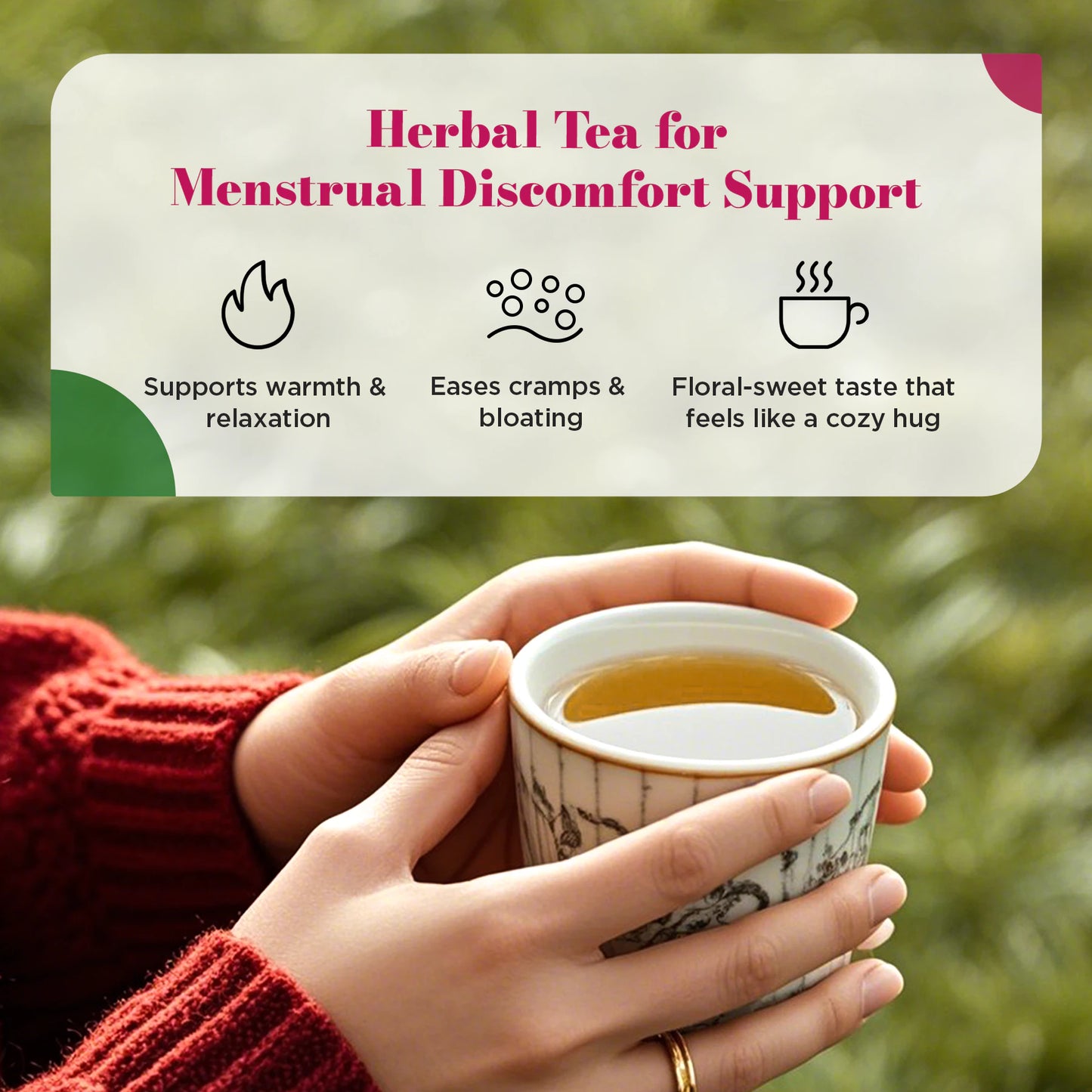
Laicuherb Ease Period Comfort Tea is described as a caffeine-free blend for the menstrual phase, made with longan, red dates, wolfberry, angelica, dried ginger, Pingyin roses, and peony petals — supplied in 8 g bags, seven per box, made for brewing and drinking only. External heat — a heating pad or a covered hot-water bottle — is a separate, physical comfort measure with its own safety rules.
A layered routine works by being honest about what each layer actually does. This guide maps that out in three practical steps, covers three settings where the combination plays out differently, and marks the point where both tools need to step aside for medical care.
Contents
- → Quick Answer: Two Tools, Two Jobs
- → What Standard Cramp-Relief Advice Covers — and Leaves Out
- → Step 1: Warmth, Hydration, or Medical Evaluation?
- → Step 2: Time External Heat Safely
- → Step 3: Add Period Tea as a Hydration and Pause Ritual
- → Three Scenarios: Home, Work, and Bedtime
- → When a Comfort Routine Is Not Enough
- → Conclusion
- → FAQ
Quick Answer: Two Tools, Two Jobs
Heating pad or hot-water bottle
- Applies external warmth to the lower abdomen or back
- Studied for primary dysmenorrhea in RCT and meta-analysis [1][2]
- Requires a fabric barrier, awake use, time limits, and skin checks
- Device instructions control duration and temperature — not preference
Ease Period Comfort Tea
- A warm brewed drink — fluid, flavor, warmth in the hands, a pause
- Caffeine-free; ingredients include longan, red dates, wolfberry, angelica, ginger, roses, peony
- Not a pain medicine; does not augment heat therapy
- Made for brewing and drinking only — not for skin application
You can use both in the same session — tea before, during a short awake session, or after the heat comes off. The sequence is a matter of personal preference, not medical protocol. The boundary that matters: severe, unusual, or worsening pain calls for clinical judgment, not another comfort layer.
The heat research cited above concerns external application of heat to the body [1][2]. It does not demonstrate that drinking herbal tea produces the same physiological effect, and it does not establish Ease Period Comfort Tea as a pain treatment.
What Standard Cramp-Relief Advice Covers — and Leaves Out

Standard guidance for primary dysmenorrhea typically covers external heat, over-the-counter NSAIDs or analgesics, rest, light movement, and clinical assessment when pain doesn't fit a typical pattern. The American College of Obstetricians and Gynecologists includes a heating pad or hot-water bottle among comfort options for painful periods [3].
What that guidance rarely specifies is the practical handoff between tools — when to start each one, when to stop, and when neither is enough. A plan that treats heat and tea as interchangeable layers misses an important point: they operate through completely different routes and answer different needs.
Ease Period Comfort Tea fills the drink-and-pause layer. Its supplied product documentation — ISO-FSSC, COI, and COA records — addresses manufacturing and quality information. It does not establish a pain-relief claim, prove individual suitability, or replace the clinical assessment that some presentations of menstrual pain require.
Step 1: Warmth, Hydration, or Medical Evaluation?
Before reaching for either tool, it helps to name what the current moment actually calls for. If the lower abdomen or back feels tight and external warmth has been soothing before, heat may be a reasonable starting point. If you feel chilled, tired, or simply want a reason to sit still for a few minutes, a warm drink addresses that layer.
Medical evaluation comes first when pain is:
- Sudden and unusually intense, or significantly worse than prior cycles
- Accompanied by fever, fainting, or very heavy bleeding
- Occurring outside your typical period pattern, or with pregnancy possibility
- Causing repeated missed school, work, or sleep
- Associated with pain during sex, bleeding after sex, or new pelvic symptoms
- Requiring progressively more pain medication across cycles
Neither a tea nor a heating pad substitutes for that evaluation. Ease Period Comfort Tea is made for brewing and drinking. Do not apply the used bag to skin, add the dried blend to food, or treat it as a topical treatment of any kind.
Step 2: Time External Heat Safely
Safe heat practices
- Use a device designed for body application
- Place a fabric barrier between device and skin
- Choose a comfortable low or moderate setting
- Stay awake and check the skin periodically
- Follow the device's own duration instructions
Stop immediately if you notice
- Burning or pain under or around the device
- Skin that looks red, blistered, or mottled
- Numbness or reduced skin sensation
- Any feeling that the heat is becoming difficult to judge
Consumer guidance commonly references short sessions of around 15–20 minutes, but the device instructions and your individual skin response should control duration more than any fixed number. People with diabetes-related nerve changes, reduced circulation, impaired sensation, or broken skin should use extra caution or ask a healthcare professional whether heat is appropriate.
Do not fall asleep on an electric heating pad. Do not trap a hot device tightly under clothing or bedding. If you drink period tea during a heat session, sit upright and remain awake for the duration.
Step 3: Add Period Tea as a Hydration and Pause Ritual
Once the heat plan is in place, the tea adds a separate layer: fluid, flavor, warmth in the hands, and a reason to pause. Steep one 8 g bag in hot water according to the product instructions and drink it slowly. The ingredient blend — longan, red dates, wolfberry, angelica, dried ginger, Pingyin roses, and peony petals — is caffeine-free.
The practical job of the cup is modest and honest: it is a drink. Current evidence does not establish that this finished tea treats menstrual pain, reduces prostaglandin production, or amplifies heat therapy. Attributing a cycle's pain level to the tea — either as a cause of relief or a cause of change — goes beyond what the ingredient research supports.
Drink it before heat, during a short awake session, or after the pad comes off. It works equally well as a standalone drink when heat is not practical. For product or brewing questions, contact hiherbs0129@gmail.com.
Three Scenarios: Home, Work, and Bedtime
When a Comfort Routine Is Not Enough
A comfort routine is appropriate for ordinary primary dysmenorrhea. It is not appropriate as a long-term strategy when pain is worsening, escalating in medication requirement, or arriving with symptoms that suggest a secondary cause [4][5][6].
Consider medical assessment when:
- Pain has progressively worsened over several cycles
- You require steadily increasing doses of pain medication
- You regularly miss school, work, or sleep because of cramps
- Pain is accompanied by fever, fainting, or very heavy bleeding
- You have pain during or after sex, or pain outside the expected period window
- Symptoms suggest conditions such as endometriosis, adenomyosis, or pelvic infection [4][5][6]
Secondary causes of dysmenorrhea require assessment and treatment that a comfort routine cannot provide [4]. Heat and tea may continue as lifestyle support after you have a clinical care plan — they should not delay getting one.
If you are pregnant, trying to conceive, breastfeeding, taking prescription medicines, or managing a health condition, ask a healthcare professional before adding a new herbal drink to your routine.
Conclusion
Three things to carry forward
- Keep the layers separate. Heat is external, time-limited, and governed by its own safety rules. Tea is a beverage and a pause ritual. They don't amplify each other — they serve different needs side by side.
- Start with the right question. Before either tool comes out, ask whether this is a moment for warmth, hydration, or medical care. The layered routine only makes sense once the third option has been ruled out.
- Know where the routine ends. Severe, unusual, worsening, or disabling pain calls for a clinician. A comfort routine has a defined scope — and that scope is not a substitute for assessment.
Laicuherb Ease Period Comfort Tea is a caffeine-free menstrual-phase blend — a warm drink and a deliberate pause. Use it as one layer in a routine that also knows its own limits.
FAQ
Hiherbs
Laicuherb Ease Period Comfort Tea
Caffeine-free · Menstrual phase blend · Longan · Red Dates · Wolfberry · Angelica · Ginger · Rose · Peony · 8 g bags × 7
View Product Page →Questions about ingredients, sourcing, or product documentation:
hiherbs0129@gmail.com
If pain is severe, unusual, worsening, or disabling, contact a healthcare professional. This product is not intended to diagnose, treat, cure, or prevent disease.
References
- Akin, M. D., Weingand, K. W., Hengehold, D. A., Goodale, M. B., Hinkle, R. T., & Smith, R. P. (2001). Continuous low-level topical heat in the treatment of dysmenorrhea. Obstetrics & Gynecology, 97(3), 343–349. doi.org/10.1016/S0029-7844(00)01163-7
- Jo, J., & Lee, S. H. (2018). Heat therapy for primary dysmenorrhea: A systematic review and meta-analysis of its effects on pain relief and quality of life. Scientific Reports, 8, 16252. doi.org/10.1038/s41598-018-34303-z
- American College of Obstetricians and Gynecologists. Dysmenorrhea: Painful periods. ACOG patient guidance. acog.org/womens-health/faqs/dysmenorrhea-painful-periods
- Proctor, M., & Farquhar, C. (2006). Diagnosis and management of dysmenorrhoea. BMJ, 332(7550), 1134–1138. doi.org/10.1136/bmj.332.7550.1134
- Burnett, M., & Lemyre, M. (2017). No. 345 — Primary dysmenorrhea consensus guideline. Journal of Obstetrics and Gynaecology Canada, 39(7), 585–595. doi.org/10.1016/j.jogc.2016.12.006
- Dawood, M. Y. (2006). Primary dysmenorrhea: Advances in pathogenesis and management. Obstetrics & Gynecology, 108(2), 428–441.
Original article source reference: Laicuherb Editorial. Period Tea and Heating Pads: Designing a Layered Comfort Routine. Laicuherb.com.